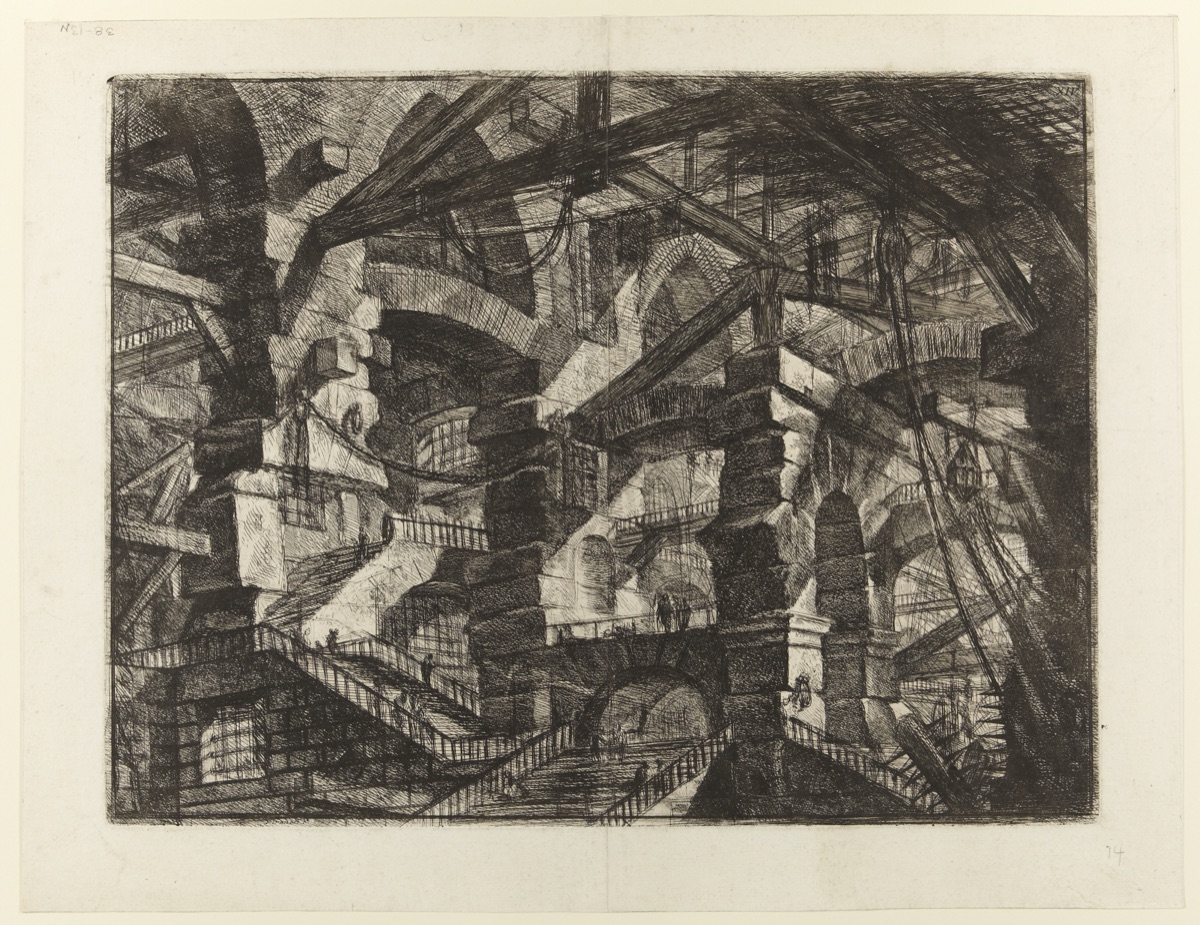
There is a pattern so persistent across civilizations, ecosystems, and scales of organization that calling it a tendency understates it. It may be closer to a law.
Capital accumulates. Power concentrates. Complexity compounds. These three statements might describe the same phenomenon at different levels of description — and if they do, the implications reach far beyond economics or politics. They reach into the structure of life itself.
What follows is an attempt to trace a single thread from the behavior of the simplest living systems to the dynamics of global capital, and to ask whether what we observe in markets and empires is not a human invention but something more like gravity — a default attractor state that any sufficiently complex system falls into unless energy is spent preventing it.
Life as Value Capture
Begin at the bottom. A living cell is a pocket of local order in a universe trending toward disorder. Schrödinger called this negative entropy — the ability to maintain and increase internal organization by importing energy and exporting waste. Life doesn't merely resist entropy; it exploits thermodynamic gradients to build structure.
But notice what this requires. A cell must capture more energy than it expends. It must extract value from its environment and convert that value into further capacity for extraction. A root system reaches deeper. A neural network models the world more accurately. A predator grows faster, sees farther, coordinates with others. At every scale, life that captures value more effectively than its neighbors persists, and life that doesn't, doesn't.
This is not a metaphor for economics. It is the process that economics later describes in a more specific context. The logic of surplus — capture more than you consume, and reinvest the difference — is not a human innovation. It is what life does.
Complexity Is Technology
What does life do with surplus? It builds complexity. And complexity, externalized, is technology.
This claim requires expanding the usual meaning of the word. A spider's web is technology — an external structure that extends the organism's capacity to capture resources beyond what its body alone permits. A beaver's dam is technology. Mycorrhizal networks that allow trees to share nutrients across a forest are technology. Each represents biological surplus converted into structure that improves future value capture.
Human technology follows the same logic at a different scale. Language allows coordination among agents, dramatically expanding the group's capacity to capture and distribute resources. Writing stores information across generations, compounding the returns on past learning. Agriculture converts ecological knowledge into storable, controllable caloric surplus. Each innovation is complexity deployed in service of further complexity.
The ratchet runs in one direction. Technology enables surplus; surplus funds further technology; further technology enables greater surplus. This is not guaranteed — civilizations collapse, species go extinct, complexity can overshoot its resource base. But the tendency is compounding. When conditions permit, complexity builds on complexity. Life doesn't arrive at a satisfactory level of organization and rest. It escalates.
Enframing: How Technology Reshapes Perception
Here the argument takes a turn from biology into philosophy, but the turn is necessary.
Martin Heidegger identified something he called Gestell — usually translated as "enframing" — as the essence of modern technology. His claim was not about machines or gadgets but about a mode of perception. Under enframing, the world reveals itself as standing-reserve: raw material awaiting use. The river is not a river; it is hydroelectric potential. The forest is not a forest; it is board-feet of lumber. The person is not a person; she is a human resource.
This is usually read as a critique of modernity — a lament for something lost. But if the argument above holds, enframing is not a modern aberration. It is what a sufficiently complex life form naturally does. Life has always treated its environment as standing-reserve. The hawk sees the meadow as a field of caloric potential. The fungus sees the fallen tree as substrate. What changes with human technology is not the logic but the scale and self-awareness of the process.
Technology doesn't just extend human capacity. It trains human perception to see the world in terms of extractable value. And this perceptual shift, once established, becomes self-reinforcing: the more effectively you frame the world as resource, the more resources you capture, which funds more technology, which deepens the framing. The mind itself is captured by the ratchet.
Capital as Stored Optionality
Now translate this into social terms.
When a system — an organism, a household, a firm, an empire — captures more value than it immediately consumes, the surplus must go somewhere. It can be dissipated, distributed, or stored. Stored surplus is capital. And capital, at bottom, is optionality: the capacity to command future states.
A squirrel's cache of acorns is capital. A farmer's granary is capital. A merchant's gold is capital. A venture fund's portfolio is capital. The forms differ; the function is identical. Capital is what any agent accumulates when it successfully captures more value than it needs to survive the present moment.
But capital has a property that makes the ratchet dangerous: it compounds. Having capital makes it easier to acquire more capital. The farmer with surplus grain can hire labor, buy tools, acquire land. The merchant with surplus gold can finance riskier ventures with higher expected returns. The firm with market dominance can buy competitors, lobby regulators, fund research that raises barriers to entry. Advantage converts to further advantage through nearly any mechanism of interaction.
This is the Matthew Effect — "to him who has, more shall be given" — but stated as a dynamic rather than a moral observation. It appears in network science as preferential attachment (connected nodes attract more connections). It appears in physics as gravitational accretion (mass attracts mass). It appears in ecology as competitive exclusion (dominant species capture disproportionate resources). The specific mechanisms differ across domains. The attractor dynamics are the same.
Capital Is Power
Call capital what it is: power. The capacity to command future states is the capacity to direct the behavior of others, shape the environment, set the terms of exchange. In any system with multiple agents, the agent with more optionality can wait longer, absorb more risk, and select from more strategies. This is definitionally an advantage, and it converts into further optionality.
The distinction between economic power and political power — a distinction central to liberal theory — may be less fundamental than it appears. Both are stored capacity to direct outcomes. A feudal lord directs outcomes through land tenure and military force. A modern corporation directs outcomes through capital allocation and market position. A state directs outcomes through law and violence. The currencies differ. The underlying dynamic — accumulated capacity to constrain the options of others — is the same.
And all of it feeds back into the loop. Power funds technology. Technology captures value. Value accumulates as capital. Capital is power. And critically: the power to check power is still power, subject to the same dynamics. There is no Archimedean point outside the field from which to apply leverage without becoming a new center of gravity.
The Full Loop
Assemble the chain:
Life seeks value to perpetuate itself. The logic of surplus — capture more than you consume — is not optional; it is what distinguishes living systems from dead matter. Surplus funds complexity, and complexity externalized is technology. Technology reshapes perception so the world appears as standing-reserve — as resource to be captured. Captured value accumulates as capital. Capital compounds because advantage converts to further advantage through any mechanism of interaction. Capital is power, and power directs the cycle's next turn — funding more technology, capturing more value, concentrating more capital.
Each turn of the loop accelerates the next. The ratchet tightens.
If this is right, then capital accumulation is not a feature of any particular economic system. Capitalism did not invent it; capitalism named it, systematized it, and removed some of the friction that slowed it down. But the underlying dynamic — concentration as attractor state — precedes capitalism, precedes feudalism, precedes agriculture. It precedes humanity. It is operative wherever agents with differential resources interact in a shared environment.
The Exception That Proves the Rule
And yet. For the vast majority of human existence — roughly three hundred thousand years — this ratchet did not produce anything resembling the concentration of power we observe in stratified societies. Something held it in check.
Anthropologists studying immediate-return hunter-gatherer societies — groups like the Hadza, the Ju/'hoansi, and various Aboriginal Australian peoples — have documented social arrangements that appear specifically designed to prevent accumulation. These are not societies that failed to develop surplus. They are societies that actively dismantled it.
The key mechanism is demand sharing: anyone can demand a share of anyone else's surplus, and social norms make refusal nearly impossible. A successful hunter does not own his kill. Others claim portions as a matter of right, not charity. Hoarding is not merely frowned upon — it is treated as a kind of social pathology, met with ridicule, ostracism, or abandonment.
Anthropologist James Woodburn distinguished between immediate-return systems, where people consume resources shortly after acquiring them, and delayed-return systems, where resources are stored, invested, and converted into future claims. His observation was that immediate-return societies are radically egalitarian in a way delayed-return societies never are. The moment surplus becomes storable and defensible — the moment delayed return becomes possible — stratification begins.
But we must be honest about what demand sharing actually is. It is not an escape from gravity. It is gravity expressed through a different currency. The person who can mobilize social shame against a hoarder holds power. The group that enforces leveling norms is exercising coercion — soft coercion, perhaps, but coercion nonetheless. The demand sharer who takes from the successful hunter is, at the level of underlying dynamics, doing what any agent does: capturing value through whatever mechanism the local system makes available. In a market society, you accumulate capital. In a demand-sharing society, you accumulate social leverage — the standing to make claims, the capacity to direct ridicule, the influence to decide who is hoarding and who is merely holding.
The egalitarian outcome is real. The escape from the ratchet is not. The ratchet has merely been redirected — channeled through social rather than material capital, expressed in reputation and obligation rather than grain and gold. This works, for a time, because social capital in a mobile, small-scale society is harder to concentrate permanently than material capital in a settled one. People can walk away. But the underlying dynamic — agents seeking advantage through whatever mechanism is available — is identical.
This matters because it applies to every leveling mechanism, not just demand sharing. The regulator is inside the gravitational field. The tax collector accumulates the power to tax. The revolutionary committee becomes the new elite. The compliance department designed to check corporate power becomes a power center in its own right. The person who administers the Jubilee holds extraordinary authority — the authority to decide when debts are cancelled and whose land is returned. Every countermeasure to concentration becomes a new vector for concentration. This is not a failure of particular countermeasures. It is the ratchet operating on the countermeasures themselves.
This suggests something important. It is not that concentration is inevitable in every possible arrangement. It is that concentration is the default — the state any system falls into once the preconditions for accumulation are met, and that no agent, no institution, no ideology stands outside the field. Immediate-return societies achieved egalitarian outcomes not by escaping gravity but by creating conditions where gravity's expression through material accumulation was constantly frustrated — mobility, immediate consumption, social pressure. The outcomes were real even if the escape was not.
In other words, they didn't escape gravity. They channeled it. The moment they settled, stored grain, built walls — the moment the dominant channel shifted from social to material capital — the ratchet found its more familiar expression.
What the Ratchet Means
If capital accumulation is a law rather than a choice, and if no agent stands outside the gravitational field, several consequences follow.
First, redistribution is not a one-time correction but a permanent energy expenditure — and the agents performing the redistribution are themselves subject to the ratchet. The redistributor accumulates the power to redistribute. The progressive tax system requires an agency to administer it, and that agency acquires budget, personnel, jurisdiction, institutional interests. It fights concentration in the economy while concentrating power in the state. This is not hypocrisy. It is gravity operating on the countermeasure. The moment the energy input stops — the moment the leveling mechanisms weaken, the institutions decay, the political will dissipates — the system relaxes back toward concentration. Every egalitarian arrangement in history has either maintained itself through continuous effort or collapsed into stratification.
Second, regulation faces a structural disadvantage that is worse than usually acknowledged. The standard critique is external capture — that concentrated private power corrupts regulators through lobbying, revolving doors, and information asymmetry. This is real but incomplete. The deeper problem is internal: the regulator is a power center that follows its own gravitational logic. Agencies expand their jurisdiction. Bureaucracies grow. The compliance apparatus becomes an industry. Regulatory complexity itself becomes a barrier to entry that benefits incumbents — the very concentration it was designed to check. The regulator does not need to be captured by outside forces to serve concentration. The regulator is a concentrating force, by the same logic that makes every institution a concentrating force. It seeks to persist, to grow, to extend its domain. It accumulates the power to regulate, and that power compounds.
Third, revolution resets initial conditions but does not alter the dynamics. Post-revolutionary societies reconcentrate power within one or two generations, often faster, because the revolutionary apparatus itself becomes the nucleus of the new concentration. The committee of public safety, the vanguard party, the liberation army — each begins as a countermeasure to the old regime's concentrated power and becomes the seed crystal of the new concentration. The pattern is visible from the French Revolution to the Soviet Union to every post-colonial state that replaced colonial extraction with domestic extraction. The revolutionaries are not betraying their ideals. They are inside the gravitational field, doing what agents inside the gravitational field do.
Fourth, even ideological and moral movements follow the ratchet. The social justice organization accumulates institutional power. The church accumulates land, wealth, and political influence. The anti-corruption commission becomes corrupt. The watchdog acquires interests that diverge from the watched. This is not cynicism. It is the recognition that no institution, no ideology, no individual stands outside the field. The monk seeking poverty must organize a monastery, and the monastery acquires property. The prophet denouncing worldly power attracts followers, and followers are a form of power.
Fifth — and this is where the argument becomes genuinely unsettling — the ratchet may be accelerating. Digital technology concentrates value at speeds and scales that prior technologies could not. Software has near-zero marginal cost, meaning returns to scale are essentially unlimited. Network effects create winner-take-all dynamics in market after market. And artificial intelligence promises to automate the very cognitive labor that previously allowed distributed human agents to compete with concentrated capital. If the ratchet's speed is a function of the technology available to the system, we may be entering a phase transition.
The Question the Ratchet Raises
This essay has set a stage, not delivered a verdict. The chain from life to complexity to technology to capital to power appears coherent. The feedback loop appears real. The historical record appears to confirm concentration as default. And the hardest part of the argument: no agent — no regulator, no revolutionary, no monk, no demand-sharing egalitarian — stands outside the gravitational field. Every countermeasure becomes a new vector. Every escape becomes a new form of the thing escaped.
But a description of dynamics is not a prescription for fatalism. The immediate-return societies prove that the ratchet's expression can be channeled, even if the ratchet itself cannot be eliminated. Egalitarian outcomes are achievable. They are simply not stable without continuous effort — and the effort itself is subject to the dynamics it fights.
There are traditions — apophatic theology, certain strains of Buddhist thought, the Daoist suspicion of named and administered virtue — that claim to identify something outside the loop. A mode of being that does not treat the world as standing-reserve. A form of value that does not compound. A kingdom that is not of this world.
Whether that escape hatch is real, or merely what power looks like in the moment before it is captured — before the monastery acquires land, before the sangha accumulates patronage, before the prophet's followers become an institution — is the question that follows from everything above.
Appendix: Suggested Reading
The following works inform the argument above. Each approaches the ratchet from a different discipline — physics, philosophy, sociology, political science, anthropology, ecology — and arrives at convergent conclusions. A single representative passage from each is included to indicate its relevance.
Erwin Schrödinger, What is Life? (1944) The thermodynamic foundation. Schrödinger established that living organisms maintain their internal order by feeding on negative entropy — importing order from the environment and exporting disorder. This is the starting point of the chain: life as local concentration of order, purchased at the cost of the surroundings.
"What an organism feeds upon is negative entropy."
Martin Heidegger, The Question Concerning Technology (1954) The perceptual turn. Heidegger argued that modern technology is not merely a set of tools but a mode of revealing that discloses the world as standing-reserve — resource awaiting extraction. This is the essay's claim that technology restructures perception, not just capacity.
"Everywhere everything is ordered to stand by, to be immediately at hand."
Jacques Ellul, The Technological Society (1954) The autonomy of technique. Ellul demonstrated that technique — his term for the totality of efficient methods — operates as a self-augmenting, autonomous system that subsumes every domain it enters, including the domains meant to govern it. His work supports the claim that technology follows its own compounding logic independent of human intention.
"Technique has taken substance. It has become a reality in itself."
Robert Michels, Political Parties (1911) The iron law of oligarchy. Michels showed that every organization, regardless of its founding democratic or egalitarian commitments, develops an entrenched leadership class that serves its own perpetuation. This is the ratchet operating on institutions from the inside — the argument that no countermeasure escapes gravity.
"Who says organization, says oligarchy."
Simone Weil, Gravity and Grace (1947) The metaphysical framework. Weil named the two forces at work in the essay's argument: gravity, which governs all natural movements of the soul toward domination and accumulation, and grace, which alone operates by a different logic. Her work provides the vocabulary for the essay's closing question.
"Grace is the only exception."
All natural movements of the soul, Weil argues, follow laws analogous to physical gravity — always pulling downward, toward domination, accumulation, and force. Only grace operates by a different logic.
James C. Scott, Seeing Like a State (1998) The mechanics of legibility. Scott documented how states simplify complex local realities into standardized, readable formats — and how this simplification enables extraction and control. His concept of metis (practical, local, illegible knowledge) provides a counterweight: what resists the ratchet is precisely what resists being made legible to centralized power.
"Designed or planned social order is necessarily schematic."
Scott demonstrates that this schematism — the state's need to make complex realities legible and administrable — always ignores the essential features of functioning social life. What resists the ratchet is precisely what resists being read by centralized power.
James Woodburn, "Egalitarian Societies" (1982) The anthropological evidence. Woodburn's distinction between immediate-return and delayed-return economies is the empirical backbone of the essay's claim about demand sharing and leveling mechanisms. His work shows that egalitarian outcomes are achievable but structurally linked to specific economic conditions.
"Immediate-return systems are egalitarian, profoundly egalitarian."
Woodburn showed that when people consume resources shortly after acquiring them, the material basis for hierarchy cannot take hold — accumulated goods cannot be leveraged into authority when sharing norms make accumulation impossible.
Albert-László Barabási, Linked: The New Science of Networks (2002) The mathematics of preferential attachment. Barabási demonstrated that in networks of all kinds — social, biological, technological — new connections preferentially attach to already well-connected nodes, producing power-law distributions. This is the formal model behind the essay's claim that advantage converts to further advantage through any mechanism of interaction.
James Madison, Federalist No. 51 (1788) The architectural response. Madison's design philosophy for the American Constitution is the most articulate attempt to build a political system that acknowledges the ratchet without pretending to transcend it. His solution — ambition counteracting ambition, power checking power — accepts gravity and tries to split it into competing vectors.
"If men were angels, no government would be necessary."
conversation
Comments
Sign in to join the conversation.
No comments yet. Start the thread.