Why the Bible Is the Best Structural Critique Ever Written — And Nobody Meant It to Be
Here's something that should bother anyone who's dismissed the Bible as ancient mythology: it contains a more accurate, more durable analysis of how power works than anything Marx, Foucault, or any political theorist has ever produced. And the most likely explanation for this is the most mundane one imaginable.
Nobody planned it. They just wrote down what happened.
Think about what the Bible actually records if you strip away the theology for a moment.
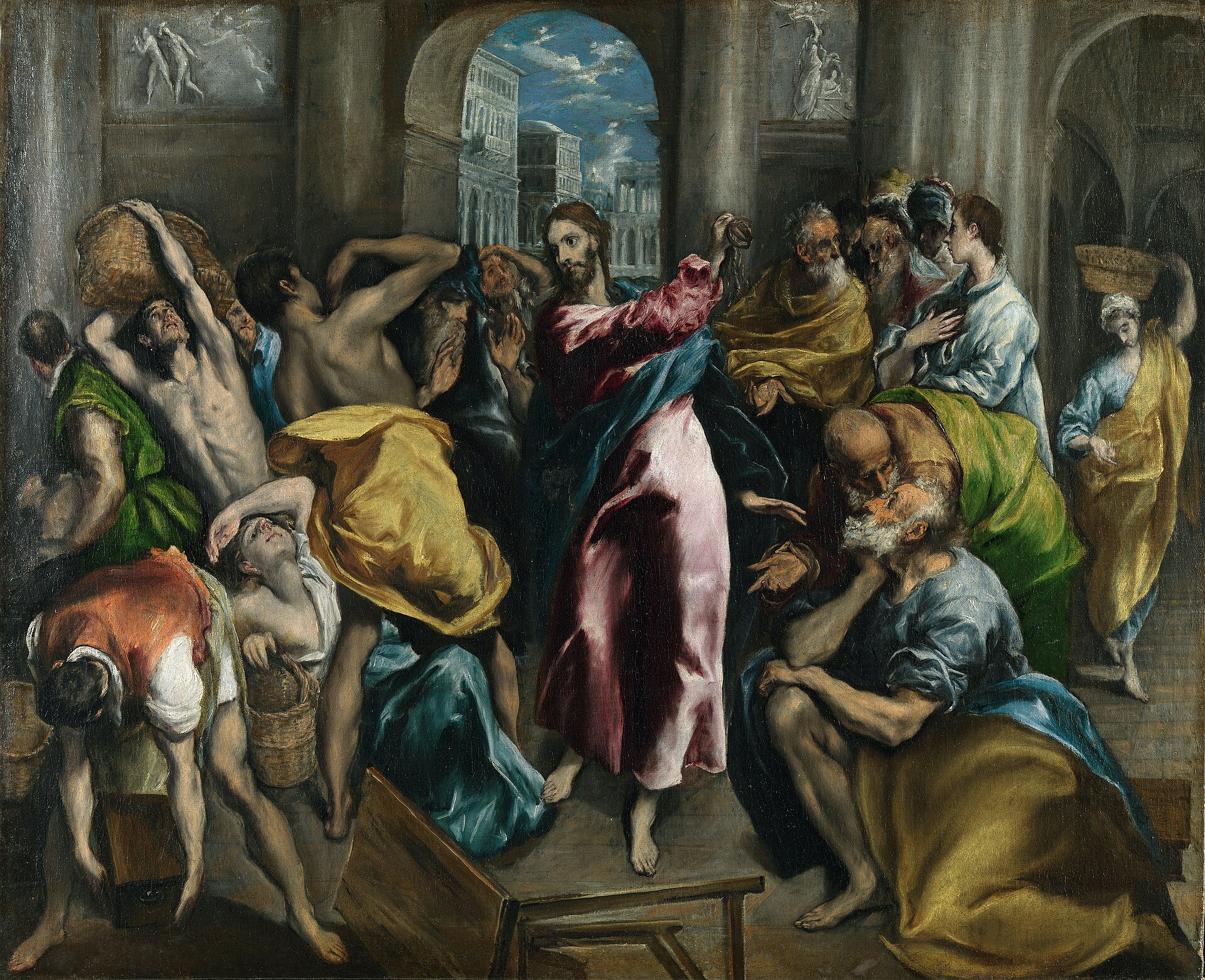
A people get liberated from an empire. Immediately — immediately — they build a golden calf. The liberation technology gets captured before Moses is back down the mountain. They establish judges. The judges become corrupt. They demand a king. God (or Samuel, depending on your reading) tells them exactly what will happen: the king will take your sons for his army, your daughters for his kitchens, your fields for his friends. They get the king anyway. The king does exactly that. The kingdom splits. Both halves get captured by internal elites and external empires. Prophets arise to critique the corruption. The prophetic institution itself gets captured — Jeremiah has to denounce false prophets. The Temple, built to house the divine presence, becomes a tool of priestly power. God's glory literally leaves the building (Ezekiel 10-11). They rebuild. It gets captured again. Jesus shows up, flips tables, gets executed by a coalition of religious authorities and imperial power. A church forms. By the time we get to Revelation, the letters to the seven churches are already diagnosing institutional rot in the movement founded to resist institutional rot.
That's not a theology. That's a dataset. Thousands of years of a single community honestly recording what happened to their institutions, their leaders, their movements, and their reforms.
And the pattern that emerges — without anyone trying to extract it — is devastating:
Every liberation becomes a new captivity. Every reform creates new administrators. Every critique gets institutionalized. Every revolution that succeeds becomes the thing it overthrew. The prophet who denounces false prophets becomes the template for false prophets. The text warning about captured religion becomes the centerpiece of captured religion.
Marx noticed this pattern in the 19th century and built a theory around it. Class conflict, dialectical materialism, the critique of ideology — these are attempts to formalize what the Bible simply narrates. And here's the irony Marx never resolved: the moment you formalize the critique, you've made it capturable. You get Marxist orthodoxy, Marxist academics, Marxist parties, Marxist states — the critique of power becomes an instrument of power within a generation. Who critiques the critics? Marx has no answer.
The Bible has an answer, but not because anyone was clever enough to engineer one. The answer emerged from the form itself. Because the biblical writers were recording rather than theorizing, the critique lives in stories rather than propositions. You can't capture a narrative the way you can capture a theory. You can build an institution around a set of principles. You can't quite do the same thing with the messy, contradictory, often horrifying record of what people actually did.
And the biblical editors — across centuries of compilation — preserved the contradictions. They kept the pro-monarchy texts alongside the anti-monarchy texts. They kept the Temple psalms alongside the prophets who denounced the Temple. They kept Ecclesiastes, which practically deconstructs the rest of the wisdom literature, inside the wisdom literature. Whether they did this out of intellectual sophistication, theological conviction, or simple fidelity to the tradition doesn't matter. The effect is the same: a text that resists systematization, and therefore resists capture, more effectively than any deliberately designed system.
Here's what should convince even the most committed atheist to take the Bible seriously — not as divine revelation, but as empirical observation.
If you honestly record what happens to human communities and their institutions over a long enough time horizon, you will discover the structure of reality. Not because you're smart. Not because you have a theory. But because reality has a structure, and a sufficiently honest record will reveal it.
The Bible is, at minimum, roughly two thousand years of a single civilization writing down what actually happened to them — their liberations and enslavements, their reforms and corruptions, their prophets and false prophets. And what emerged from that record is an analysis of institutional power that no individual thinker, working from a single vantage point in a single century, could have produced.
Marx observed capitalism for a few decades and built a theory. The biblical tradition observed power itself for millennia and produced a record. The record outperforms the theory because it has more data, more honesty, and less abstraction.
This isn't a claim about God. It's a claim about time and honesty. Write down what really happens for long enough and you'll arrive at structural truths that deliberate theorists can only approximate. The Bible isn't powerful because it was inspired. Or rather — the most mundane version of "inspired" might be the strongest: these people were moved, for whatever reason, to keep an honest record, and an honest record kept long enough becomes revelation.
Not because anyone planned it. Because reality has a shape, and if you pay attention long enough, the shape shows itself.
The deepest irony is that this insight — the Bible as accidental structural masterpiece — will itself be captured if anyone tries to build a program around it. Some seminary will offer a course called "The Bible as Structural Critique." Someone will systematize the insight into a methodology. The methodology will become an institution. And the cycle the Bible documents will claim another victim.
The only posture that resists this is the one the text itself models: keep recording honestly. Don't theorize. Don't systematize. Just watch what happens and write it down. The structure will reveal itself to anyone paying attention.
It always does.
Suggested Reading
Robert Alter, The Art of Biblical Narrative (1981). Alter demonstrates that the biblical authors' literary sophistication is inseparable from their honesty — that the preservation of contradiction, ambiguity, and moral complexity is not archival sloppiness but a deliberate narrative technique. His close readings show how the David stories hold heroism and corruption in suspension without resolving either, how Genesis presents the patriarchs as deeply flawed without editorializing, and how the text's refusal to smooth its contradictions is what makes it structurally irreducible. The "messy, contradictory, often horrifying record" this essay identifies as the Bible's strength is what Alter demonstrates as its literary achievement.
Walter Brueggemann, The Prophetic Imagination (1978). Brueggemann's argument that the prophetic tradition operates through two movements — criticizing the dominant consciousness and energizing an alternative one — explains the mechanism by which the biblical critique resists capture. The prophets did not propose better systems. They performed grief (lament over what was lost) and hope (imagination of what could be), and these two postures are harder to institutionalize than propositions. Brueggemann's insight that the royal consciousness always tries to monopolize both the language of grief and the language of hope explains why the record's honesty — its refusal to let either posture be captured — is its most subversive feature.
René Girard, Things Hidden Since the Foundation of the World (1978). Girard argues that the biblical tradition is unique among the world's sacred literatures because it systematically takes the side of the victim rather than the community that sacrifices the victim. This is the anthropological version of the essay's claim: a record that preserves the perspective of the scapegoat, the exile, the conquered — rather than only the victor's account — will produce structural insights about power that no victor's history can generate. The Bible's honesty is not merely editorial. It is perspectival: it records what power does from underneath.
James C. Scott, Domination and the Arts of Resistance (1990). Scott's distinction between "public transcripts" (the official story power tells about itself) and "hidden transcripts" (the stories the dominated tell among themselves) provides the political framework for understanding why the Bible's preservation of internal critique is so unusual. Most institutional records are public transcripts — self-legitimating, contradiction-smoothing, dissent-erasing. The biblical editors preserved what Scott would call the hidden transcript inside the public one. The prophetic denunciations of the Temple sit within the Temple's own canon. This is an institutional self-critique with no precedent in the ancient world.
Nassim Nicholas Taleb, Antifragile (2012). Taleb's concept of antifragility — systems that gain from disorder rather than merely withstanding it — explains why narrative resists capture in ways that formalized theory cannot. A theory is fragile: one counterexample can break it. A narrative is antifragile: contradictions, failures, and embarrassments make it stronger by expanding its range of testimony. The Bible's preservation of its own internal contradictions is not a defect. It is the mechanism by which the record gains strength from the very disruptions that would destroy a system. Marx's theory was fragile. The biblical record is antifragile.
conversation
Comments
Sign in to join the conversation.
No comments yet. Start the thread.