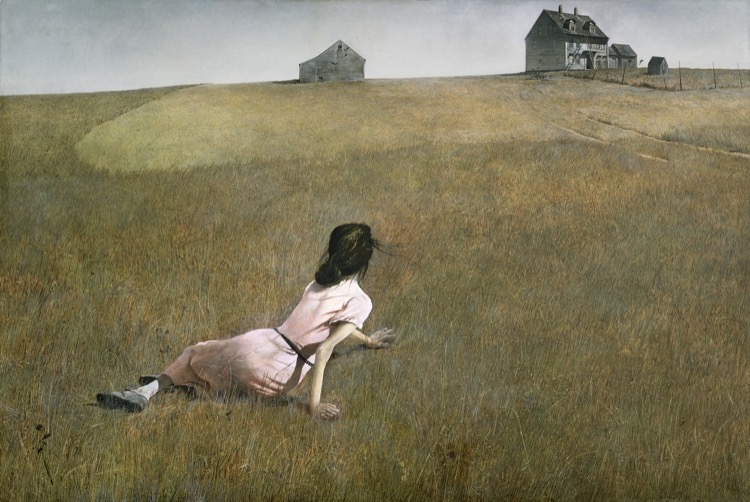
Part of a series as I try to uncover the terminus of the liberal and neoliberal order.
- The Gaze - Generational identity construction
Rather than looking at the trend of the identities of each generation, this story follow a particular person through each generation.
I. Dorothy, 1953
The bus pulled out of Harlan at six in the morning and Dorothy Marsh did not look back. Not because she was hard, but because there was nothing dramatic in it. You left or you didn't. She had saved eleven months of wages from the dime store and she was twenty-two years old and Pittsburgh was where things were happening.
Her mother had cried. Her father had said nothing, which was worse. Her aunt had told her she would come back with her tail between her legs, and Dorothy had smiled and said maybe so, and she meant it as a kindness, because she already knew she wouldn't.
Harlan was not a bad place. That was the thing nobody understood. It was not poverty she was leaving, not exactly, though they were not comfortable. It was the weight of it. The way Mrs. Calhoun knew every piece of business that passed through the Marsh house. The way her father's moods governed the whole street, because everybody owed somebody something and the debts ran back thirty years. The way the church expected her on Sunday and expected her opinion on nothing. The way Tommy Garrett had looked at her since she was sixteen, and the whole town had decided that looking meant something, and now she was supposed to turn it into a life.
She had read books. She knew that elsewhere a woman could be a person first and a Marsh second.
Pittsburgh was cold and enormous and her first room was above a laundry on Penn Avenue and smelled of steam and lye. She got a job as a typist at Mellon Bank. She learned the bus routes. She ate dinner alone and found she did not mind it, which surprised her. In Harlan you were never alone and she had not known until now how much of her energy had gone to the management of proximity.
By the second year she had friends, real ones, women she had chosen. By the third she had a better apartment. By the fourth she had met Gerald, who was an engineer and read the same books and did not look at her like a decision he had already made.
They married in 1958. Small ceremony. Her parents came up on the bus and her mother stood in the reception hall of the city clerk's office and looked around at the marble floors and the high windows and Dorothy could see her trying to locate her daughter in all of it and not quite finding her.
Dorothy found her, though. Every morning she put on her good coat and walked three blocks to the trolley stop and the city received her as what she was, which was a person, and she thought: this is what it was for. Not the leaving. The arriving.
Her daughter Carol was born in 1960 into a house with books on every wall and a mother who knew who she was.
II. Carol, 1978
The divorce was not a tragedy. That was what Carol needed her mother to understand, and what her mother could not quite manage.
It had been a good marriage for six years and then it had not been, and Carol had stayed three years past the end of it for reasons she now recognized as fear dressed up as virtue. When she finally signed the papers she sat in her car in the parking lot of the attorney's office and waited for devastation and what came instead was a physical sensation of lightness, as if something had been lifted from her sternum that she had stopped noticing was there.
She was thirty-four. She had a daughter, Renee, who was seven and adaptable. She had a job she was good at, assistant director of curriculum development for the city school district. She had a therapist she'd been seeing for two years who had gently, persistently asked her what she wanted, which turned out to be a question nobody had asked her before, and the asking had changed something.
What she wanted was: her work. Her own apartment. To finish her master's degree. To stop performing contentment and see what happened.
Her mother came for a weekend in October and they sat at Carol's kitchen table after Renee was in bed and Dorothy said, I just want you to be happy, and Carol said, I am, and her mother looked at her carefully, looking for the lie, and found something that was not a lie, and that unsettled her more than the lie would have.
The women Carol knew were doing this. Some had not married at all. Some had married and left, some had stayed and were beginning to understand they had a choice, which was itself a change from understanding they had a duty. The change had happened fast, faster than anyone had planned, and there was grief in it sometimes, Carol knew that. But there was also—she reached for the word—spaciousness.
She finished her degree in 1981. She was promoted twice. She dated a man for two years and ended it cleanly when it became clear he wanted her to want less, and she had learned by then that wanting less was the one thing she would not do.
Renee grew up watching her mother choose things, which Carol knew was the whole point.
At her retirement party in 2007, the superintendent said that Carol Marsh had helped more children in this district than anyone he could name, and Carol accepted this graciously and drove home and poured a glass of wine and sat in her garden, which was only hers, and thought about all the things she had made and kept and grown, and they were real, and they were enough.
III. Renee, 1999
Therapy had given Renee a language and the language had given her a self, and she was twenty-six and for the first time in her life she felt legible to herself.
She had grown up knowing that women could choose things. Her mother had demonstrated this clearly, almost pedagogically, and Renee had absorbed it and then gone to college and discovered that she had not, actually, been choosing—she had been executing a program written in someone else's decade. The therapist, Dr. Okafor, had spent eight months helping her see this. The anxious achievement. The compulsive helpfulness. The way she experienced her own desires as obligations she had to justify.
The work was real. She was not performing it. She lay awake at three in the morning, sometimes, and examined her motivations with a rigor that frightened her, looking for the places where Renee ended and the conditioning began. It was not always easy to find the line.
She had left a PhD program in education policy after two years. Not because she had failed—she had not failed—but because she recognized she was pursuing it because her mother had valued education, and that was not the same as her valuing it, and once she saw the difference she could not unsee it. Dr. Okafor had asked her what she wanted when she cleared all of that away, and she said she wasn't sure yet, and Dr. Okafor had said that not-sure was an honest place, which was a beginning.
She was working at a nonprofit. Reasonable salary, meaningful enough. She had an apartment she loved, full of plants and good light. She had a circle of friends she had curated carefully after reading enough about attachment to understand which of her old friendships were genuine and which were compulsive. She had let the compulsive ones go, which had been painful and correct.
She had not wanted children, and she had waited a long time to say this aloud because she needed to know it was true before she claimed it. At twenty-five she had said it to her mother, who had paused, and then nodded, and said that was fine, and meant it, mostly, and Renee had loved her for the mostly as much as the fine.
She dated. She was careful about it. She had read enough to know her attachment style, her triggers, her patterns. She brought this knowledge into relationships and found it helped and also sometimes made the relationships feel like case studies. Dr. Okafor said that was a normal phase. She was working on being present.
She was happy. She would have said so without hesitation if you asked her. She was more genuinely herself than she had ever been. Her mother had taught her that a woman could choose, and she had gone further, had learned to choose consciously, with full awareness of the mechanisms, and this felt like an advance, like a ratchet clicking forward, each generation seeing more clearly than the last.
She sometimes felt, in the very early morning when she could not sleep, a vague shapeless ache she could not name. She did not worry about this. She had learned that feelings were data, not verdicts. She would bring it to Dr. Okafor.
IV. Sasha, 2019
The name had taken three years to find and finding it had been the most important thing Sasha had ever done.
Not the name itself. The process. The understanding that the given was not the real, that the real was what you found when you went underneath the given, and the going underneath was the work of a life, and Sasha was twenty-three and already further along than most people got.
The name the birth certificate said was not the name Sasha used, and this gap had once been a source of pain, a daily small violence, and was now a daily affirmation, evidence that the project of self-authorship was real and ongoing and winning.
Sasha's pronouns were they/them, which Renee had taken six months to get right and then gotten right, consistently, which Sasha counted as an act of love that meant more than a lot of things Renee had done when Sasha was a child and she was more available and less preoccupied with herself. Not a criticism. Just a thing Sasha had processed, at length, with a good therapist in Portland.
Portland was where Sasha lived now. Renee was in Baltimore. They talked every few weeks, warm and careful conversations.
Sasha worked remotely, UX research, good money, the kind of work that was portable and undemanding of loyalty, which was correct, because loyalty to institutions was a trap Sasha had learned to recognize early. The company would not be loyal to Sasha, and so the accounting was clean. Sasha was good at the work. It did not constitute an identity.
The community in Portland—and it was a community, Sasha would have said this firmly—was built around a shared commitment to authenticity. People who had also done the work, who understood that the default settings of the culture were not inevitable, who had found the me underneath the given-me and were living from that place. They had a group chat. They had a bar they went to on Thursdays. They had norms of disclosure and care that Sasha found more honest than the norms of the family Sasha had grown up in, where care was performed in particular ways that were never examined.
Sasha did not want children. This was not a decision, exactly. It was more like an absence of want, which the culture had taught Sasha to honor as information rather than interrogate as symptom. Sasha had no framework to interrogate it with, and did not feel the lack of one.
There was a lot of beauty in Sasha's life. This was true and Sasha knew it. The apartment was carefully arranged, a physical expression of the interior self, everything chosen, nothing inherited. The friends were real friends. The work of self-knowledge was genuinely enlivening and Sasha engaged it with something close to joy.
Renee, on one of their calls, had said carefully: are you lonely? And Sasha had said no, and meant it, and then later wondered if lonely was even the right category for whatever it was that Sasha sometimes felt, which was more like a distance from things, like watching the world from behind clean glass. Not cold. Not unhappy. Something more like: still.
But this was probably just a processing phase. There was always more to understand.
V. Unit 7 / Lumen, 2047
The child's name was Lumen, which had been selected from a shortlist of twelve by the Preferred Outcome Algorithm after weighing nominal aesthetics, cultural resonance, and longitudinal identity-stability indicators. The biological material had come from Donor A-114 (neurological profile: high executive function, elevated creativity index, baseline agreeableness within optimal range) and Donor B-083 (somatic health metrics: 97th percentile, heritable illness index: low, aesthetic aptitude: moderate-high). The gestation had taken place at the Portland Civic Reproductive Center in a sixth-generation artificial uterine unit, which was cleaner and more metabolically stable than a biological womb and had a complication rate one-tenth that of natural gestation.
This was not controversial. It had become unremarkable faster than anyone had predicted.
Lumen was seven years old and happy. This was measurable. The Center monitored cortisol levels, attachment indices, developmental milestones, and a suite of wellbeing indicators that had been refined over the first generation of civic children. Lumen scored well. In the 91st percentile for childhood flourishing, which was higher than the national average for family-gestated children, a fact that the Center's communications department mentioned in its quarterly reports.
Lumen's primary caregiver was a woman named Dani who had been matched to Lumen by the same algorithm that had composed Lumen's genome, which assessed caregiver temperament and child neurological profile for optimal developmental fit. Dani was warm and competent and genuinely fond of Lumen. She was also fond of the other three children she cared for, who were matched to her by the same logic. She found the work meaningful. She had chosen it.
The state called this the New Family. Public communications were careful with the term family—it was used generously, inclusively, stretched to cover every arrangement that preceded this one. The New Family was presented as the family's evolution, its emancipation from biological luck, from the accident of birth, from the unequal distribution of capable parents. You did not choose to be born to a mother who was depressed or a father who was absent. Now you were born to caregivers selected for the work, in conditions optimized for the work, with outcomes tracked and improved across cohorts. This was, the public materials said, what it meant to finally take seriously the idea that every child deserved what the luckiest children had always had.
Lumen did not know about Sasha, who was Lumen's grandmother in the strictly biological sense, though this was not a concept Lumen's social world had occasion to use. Lumen did not know about Renee, or Carol, or Dorothy. There was no occasion for knowing. Origin was not a category that organized Lumen's life, which was the point, which was the liberation.
Lumen knew Dani. Lumen knew the Center, its wide warm corridors and the garden on the roof and the other children and the learning facilitators and the feeling of being attended to, carefully, correctly. Lumen sometimes at night had a feeling that was not sadness exactly and not fear exactly, a feeling like reaching toward something and finding air. Lumen had not found a word for it. It was probably nothing. It was probably just a developmental phase.
The monitoring system registered a slightly elevated cortisol spike between 2 and 4 a.m. in children Lumen's age. The researchers noted this in their data. They were looking into it.
Lumen would tell you, if you asked, that life was good. Lumen would mean it. Lumen would have no way of knowing what the good life had cost, or what it had been built on, or what name to give the feeling that arrived, reliably, in the dark.
Lumen came from the Latin: a unit of light. It also meant, in older usage, an opening—a window, a passage, the hollow interior of a vessel through which something once flowed.
Suggested Reading
Charles Taylor, The Ethics of Authenticity (1991). Taylor's short, precise diagnosis of the culture of authenticity — the ideal that each person must find their own way of being human, that there is a unique "me" to be discovered underneath social conditioning — traces Renee's and Sasha's self-projects to their philosophical source. His argument is not that authenticity is wrong but that it becomes self-defeating when it severs the "horizons of significance" against which authenticity has meaning. A self that recognizes no authority outside itself has nothing to be authentic against, and the search for the real me becomes an endless recursion. Taylor saw in 1991 what this story dramatizes across five generations.
Zygmunt Bauman, Liquid Modernity (2000). Bauman's central metaphor — that modernity has moved from a "solid" phase (in which new structures replaced old structures) to a "liquid" phase (in which no structure holds long enough to serve as a reference frame) — is the sociological theory this story illustrates. Each generation in the narrative experiences greater liquidity: Dorothy escapes a solid community, Carol dissolves a solid marriage, Renee liquefies her own inherited identity, Sasha exists in near-total liquidity, and Lumen is produced by a system that has made liquidity the design principle. Bauman's insight that liquid modernity does not liberate people from structure but subjects them to the structure of permanent flexibility is the story's unspoken thesis.
Robert Nisbet, The Quest for Community (1953). Written the same year Dorothy left Harlan, Nisbet argued that the modern state's expansion was not the cause but the consequence of communal dissolution — that as families, churches, guilds, and neighborhoods lost their binding power, individuals turned to the state as the only remaining institution large enough to provide belonging. The trajectory from Mrs. Calhoun's knowledge to the social worker's caseload to Lumen's monitoring algorithm is Nisbet's prediction fulfilled. His deeper claim — that the individual emancipated from all intermediate communities does not become free but becomes available for total administration — is the story's final movement.
Christopher Lasch, The Culture of Narcissism (1979). Lasch's account of how the therapeutic sensibility replaced the older culture of character — how the self became a project to be managed rather than a soul to be formed — explains the mechanism by which each generation in this story inherits a thinner relation to anything outside its own interiority. His argument that narcissism is not vanity but a defensive structure produced by the collapse of durable social bonds explains Carol's spaciousness, Renee's self-examination, and Sasha's careful curation: each is a rational adaptation to a world where nothing outside the self can be relied upon to hold.
Aldous Huxley, Brave New World (1932). The final section of this story — Lumen in the Portland Civic Reproductive Center, genome-selected, algorithmically matched with a caregiver, monitored for cortisol — is Huxley's dystopia arrived by a different route. Huxley understood that the most effective unfreedom is the one that feels like liberation: not Orwell's boot stamping on a face forever, but a world so thoroughly optimized for well-being that the question of what well-being is for can no longer be asked. Lumen is happy. The flourishing index says so. This is Huxley's nightmare, achieved not through a World State's decree but through the accumulated liberations of five generations, each of which was right.
Alexis de Tocqueville, Democracy in America (1835/1840). Tocqueville saw, nearly two centuries before this story, the trajectory it traces. His concept of democratic individualism — the tendency of democratic societies to dissolve the bonds between generations, leaving each person "thrown back forever upon himself alone" — is Dorothy's departure rendered as political theory. His warning that the democratic individual, isolated from ancestors and contemporaries alike, would eventually submit to a "soft despotism" — an immense tutelary power that "takes charge of assuring their enjoyments and watching over their fate" — is Lumen's Preferred Outcome Algorithm described in 1840.
conversation
Comments
Sign in to join the conversation.
No comments yet. Start the thread.