Knowledge is local. The trail that floods in April, the shortcut only locals use, the unmarked spring — this knowledge exists in the person who walks the land. It was never written down because it never needed to be.
Knowledge is also temporal. The bridge that washes out in April is not a live fact in July. The local who would warn you in spring won't think to mention it in summer — not because they're withholding, but because the conditions that make the knowledge relevant are also the conditions that summon it. Knowledge isn't stored and retrieved; it's triggered by context.
This means the individual hiker who shows up in April, at the trailhead, asking locals about the trail, is the right query. His presence — in that place, in that season — retrieves knowledge that no survey could. The state's knowledge-collection project fails not because locals are uncooperative, but because acontextual questions cannot access contextually-indexed knowledge. You cannot survey your way to what only presence can retrieve.
The medium of extraction matters. The person who loves the trail — who gets animated talking to hikers, who follows tangents, who mentions the spring because it came up while describing the ridge — will reveal far more in conversation than on a form. The form closes off everything it didn't think to ask. And it selects against the most knowledgeable people, who are precisely those least likely to enjoy filling it out. Bureaucratic extraction doesn't just retrieve knowledge less efficiently; it repels the people who hold the most of it.
The bureaucrat, meanwhile, has no stake in the map being right. If the hiker gets stranded, someone else will find him. The local who gave the warning might be that someone. Skin in the game is not just a moral consideration — it is an epistemic one. The person who bears the cost of being wrong pays attention differently. The map made with indifference will contain the omissions of indifference.
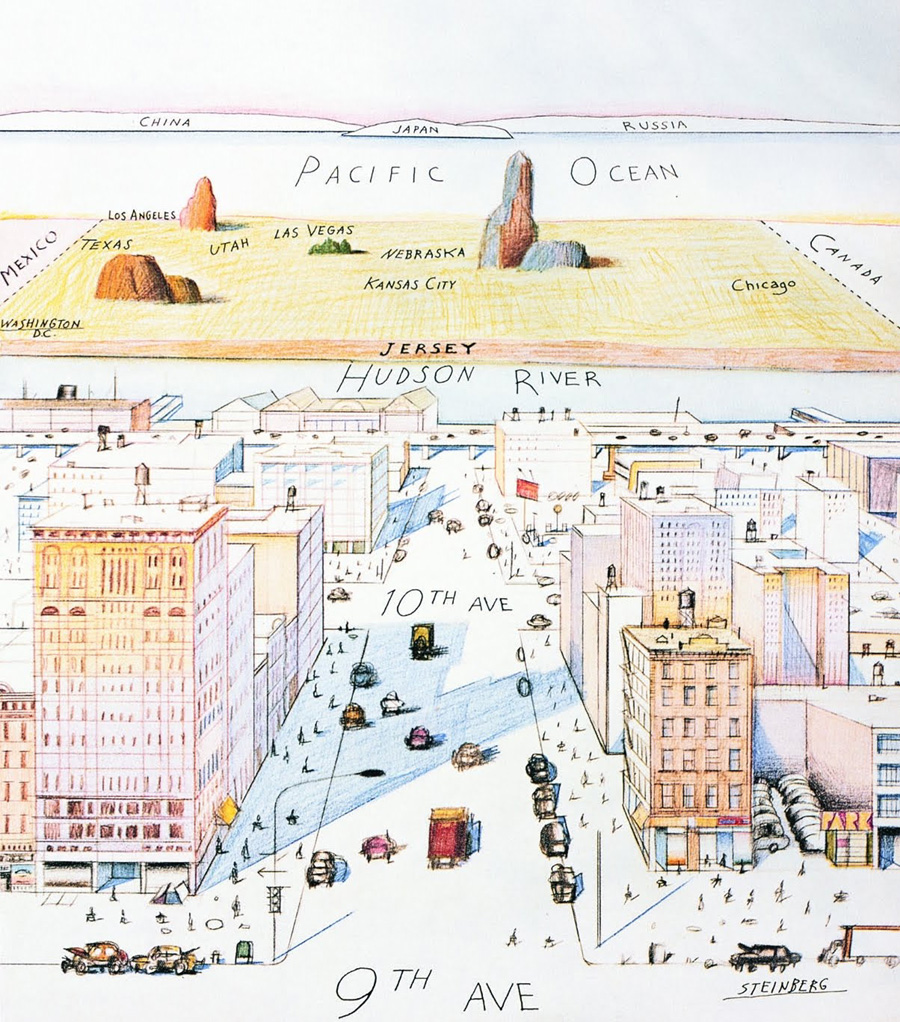
Centralization requires abstraction. To administer from a distance, you must first make things legible — standardized, nameable, transferable. But the act of transferring local knowledge to a central authority transforms it. The map is not the territory, and the map made in Washington is not even a good map.
Abstraction has a cost paid by the local. The official map shows the trail. It does not show that the bridge washed out. The hiker who trusts the official map is the one who gets stranded. The cost of the abstraction falls on the person the abstraction was meant to serve.
The center cannot know what it doesn't know it's missing. The mapmaker in Washington doesn't know about the spring because no one told him, and no one told him because no one knew he needed to know. The ignorance is invisible to itself.
Decentralization is not a preference. It is an epistemological necessity. The question is never whether local knowledge exists — it always does. The question is whether the system is built to use it, or to suppress it in favor of what the center can see.
Suggested Reading
James C. Scott, Seeing Like a State (1998). The essential text. Scott's concept of mētis — the practical, contextual knowledge that arises from sustained engagement with a specific environment — is exactly the local knowledge this essay describes. His case studies of how high-modernist state projects (Soviet collectivization, Brasília, scientific forestry) systematically destroyed the local knowledge they could not see, and failed precisely because of that destruction, are the large-scale version of the hiker and the washed-out bridge. The map made in Washington is Scott's "thin simplification" rendered as cartography.
Friedrich Hayek, The Use of Knowledge in Society (1945). The foundational economic argument for why centralization fails epistemically. Hayek's insight — that the knowledge relevant to economic coordination is dispersed among millions of individuals, is often tacit, and changes constantly — is the market-price version of the trail knowledge described here. His argument that no central planner can aggregate what only the price system can coordinate extends naturally: no survey can aggregate what only presence can retrieve.
Michael Polanyi, The Tacit Dimension (1966). "We can know more than we can tell." Polanyi's account of tacit knowledge — the knowledge embedded in skilled practice that resists explicit formulation — provides the epistemological foundation for why bureaucratic extraction fails. The local who knows the trail doesn't possess a set of propositions about the trail; she possesses a practiced familiarity that generates relevant knowledge in context. The form asks for propositions. The knowledge is not propositional.
Jane Jacobs, The Death and Life of Great American Cities (1961). Jacobs's attack on modernist urban planning is this essay's argument applied to cities. The planners who razed neighborhoods to build housing projects could not see — and therefore could not preserve — the intricate social ecology that made those neighborhoods work: the eyes on the street, the shopkeeper who watched the children, the mixed-use density that produced safety through presence. The map of the neighborhood drawn by planners in an office was not the neighborhood. The cost of the abstraction fell on the people the abstraction was meant to serve.
Nassim Nicholas Taleb, Skin in the Game (2018). Taleb's argument that epistemic quality is inseparable from exposure to consequences is the essay's point about the bureaucrat who has no stake in the map being right. The person who bears the cost of being wrong pays attention differently — this is Taleb's central claim, extended from risk-taking to knowledge itself. His concept of the "Intellectual Yet Idiot" — the credentialed expert who is systematically shielded from the consequences of his abstractions — is the mapmaker in Washington given a sociological profile.
Elinor Ostrom, Governing the Commons (1990). Ostrom's Nobel-winning research demonstrated that local communities managing shared resources (fisheries, irrigation systems, forests) routinely outperform both state regulation and privatization — precisely because local managers possess the contextual, temporal, stake-bearing knowledge that distant administrators lack. Her work is the empirical proof that decentralization is not romantic preference but measurable epistemic superiority in domains where knowledge is local.
conversation
Comments
Sign in to join the conversation.
No comments yet. Start the thread.