Related:
Why "better history" is still the wrong ground
The natural response to discovering that your textbooks lied is to ask for better textbooks. The walls are load-bearing fictions, fine — give me the load-bearing facts. Hand me Cavanaugh, Taylor, Finocchiaro, Kamen. Let me get the history right this time. Let me build my worldview on what really happened.
This is still the trap. The frame is the prison. The corrections are useful but they will not free you, because you are doing the same thing the curriculum was doing, only with different sources. You are still attempting to ground your view of reality in narrated accounts of distant events you cannot witness, evaluated by methods you cannot perform, transmitted by institutions whose credibility you cannot independently assess. The textbook lied to you. The new books are presumably better. But you have not yet asked the question that would actually break the spell.
The question is: why are you trying to ground your view of reality in distant historical narrative at all?
Trust in narrators, all the way down
There is no other way to know about 1616. None. You were not there. No one alive was there. The events left traces — letters, transcripts, marginalia, paintings, buildings — and those traces have been gathered, interpreted, contested, and synthesized by historians whose work has in turn been gathered, interpreted, contested, and synthesized by other historians, and the result has been compressed into prose that arrives at your eyes through publishers and editors and translators and curricula and algorithms and the particular books your particular friends happened to recommend.
You are not knowing 1616. You are trusting a chain of narrators about 1616. Every link in the chain is a person who made decisions about what to include and what to leave out, what to emphasize and what to bury, what to translate as this English word rather than that one, what frame to set the story inside. Every link involves trust. You did not audit any of these decisions. You almost certainly cannot. The chain is too long and the technical apparatus too specialized for any individual to verify even one strand of it down to the documents.
This is not an argument against history. History is a real discipline that produces real knowledge. The point is about what kind of knowledge it produces and what role that kind of knowledge can responsibly play in the foundation of a worldview. Historical knowledge of distant events is, by its nature, mediated knowledge. It comes to you through narrators. The only way to ground a worldview in it is to trust those narrators, and the only way to trust them well is to know them — really know them, know how they work, know the school they came out of, know what they tend to miss, know which of their colleagues they are quietly fighting and why. Working historians do this with one another. They are competent to ground something on each other's testimony because they can audit it.
You cannot. You are a layman receiving compressed reports from a guild whose internal politics you do not understand, and you have been encouraged for your entire educational life to take those reports as the ground beneath your feet. This is structurally the position of a medieval peasant trusting his priest about Aristotle, except the peasant knew the priest, ate at his table, and could watch whether his life matched his sermons. The modern has no such check. The priests are abstractions. The academy. The consensus. The experts. He cannot see them eat.
What the peasant actually knew
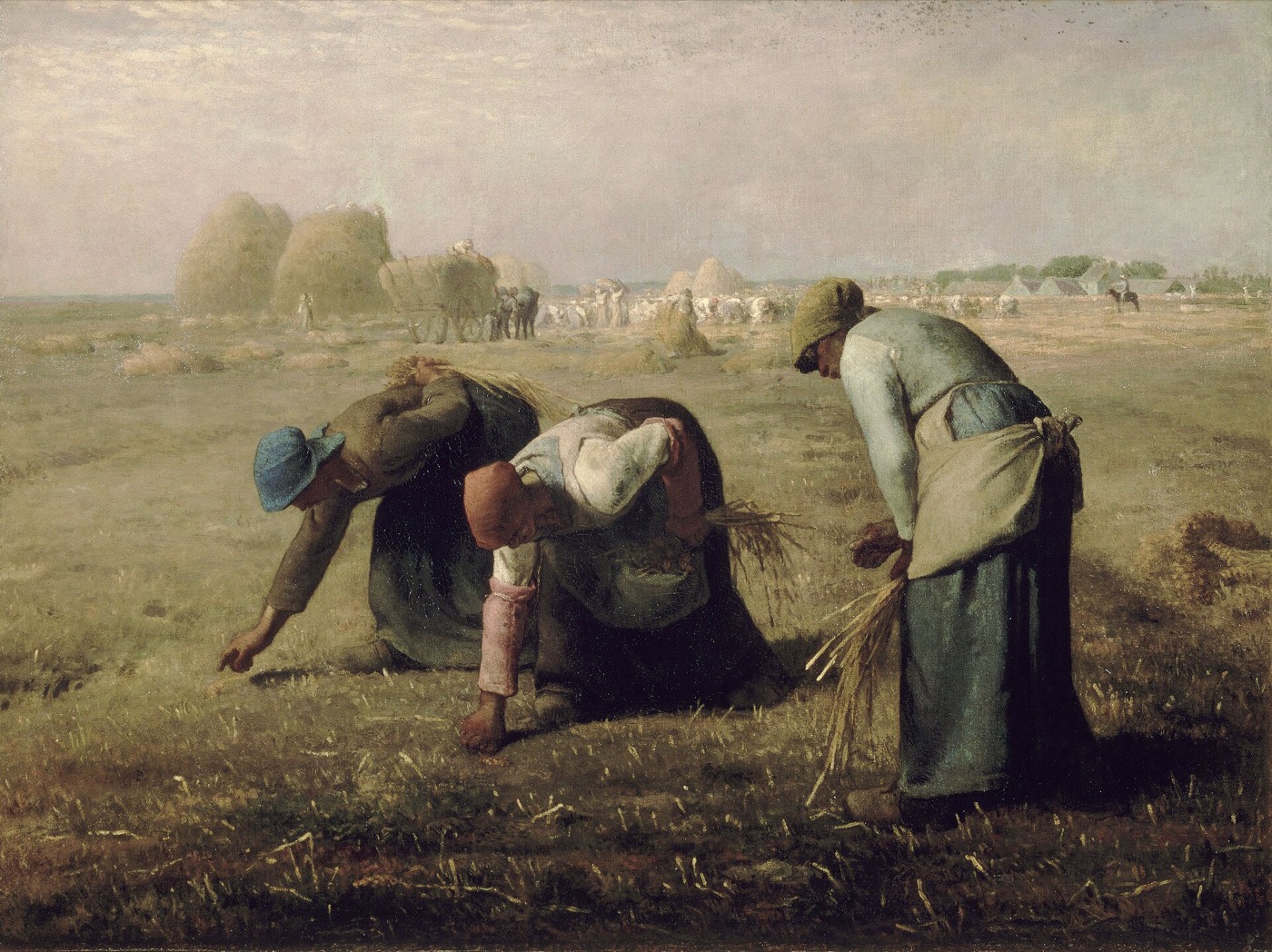
The condescension toward pre-modern epistemology depends on a comparison that was never fair. The peasant was not trying to do what the modern researcher is trying to do. He was not constructing a global account of human history from documentary evidence; he was living a life. The relevant comparison is not "the peasant's worldview vs. the historian's worldview about the past" — it's "the peasant's grounding for his actual life vs. the modern's grounding for his actual life," and on that comparison the peasant wins handily.
He knew his soil. He knew which fields drained well and which drained late, which corner of the back lot grew turnips and which grew nothing. He knew his neighbors — knew which of them paid debts and which lied, knew whose son was reliable for help with the harvest and whose was a drunk, knew which marriages were sound and which would break. He knew the saints whose tombs were down the road and the stories about them, told by people whose other stories he could check against his own life. He knew his liturgical year because he participated in it bodily — the Lenten fast, the Easter feast, the rogation procession around the fields — and the participation was the knowing. He knew his trade because he did it with his hands and the work either succeeded or it didn't. He knew his vows because he had made them and was watching them either hold him together or fail to.
This is real knowledge. It accumulates. It is checkable. It compounds across a lifetime into something a person can actually use to answer the only question worth grounding a worldview to answer, which is how do I live. The peasant could answer that question well or badly, and we would have stories about that, and the stories would mostly be about virtue — whether he did the things he knew to do, whether he kept his word, whether he loved well, whether he was patient. The questions did not require him to know anything about Galileo. He could be ignorant of distant history and not be ignorant of his life.
Michael Polanyi called this tacit knowledge — the kind that lives in skill and practice and embodied judgment, that can be transmitted but not fully articulated. Aristotle called it phronēsis, practical wisdom, and was clear that it was not the same kind of thing as theoretical knowledge and could not be acquired by the same means. Confucius called it the work of li — of doing the rites until they shaped you. Wendell Berry calls it the knowledge of a place by people who intend to stay. Albert Borgmann calls the practices that produce it focal practices — bounded, particular, repeated activities through which a person comes into contact with what is real. Every wisdom tradition on earth distinguishes this kind of knowing from theoretical knowledge and ranks it higher for the purpose of living.
The modern curriculum has flipped the ranking. Theoretical knowledge of distant abstractions ranks above practical knowledge of proximate realities. A college graduate who can produce a competent essay on the Treaty of Westphalia but cannot cook a meal, fix a leak, hold a marriage, raise a child, or sit alone in a room without a phone is considered educated. A grandmother who can do all of those things but does not know what year Westphalia was signed is considered uneducated. The ranking is upside down. The grandmother knows the things a human life requires knowing. The graduate has been trained in skills useful primarily for further schooling and for the kinds of employment that schooling leads to.
This is not a complaint about humanities education. It is a complaint about grounding — about what foundation a person stands on when the testing comes, when a child is sick or a parent dies or a marriage strains or a vocation fails or the country goes mad. Theoretical knowledge of the Treaty of Westphalia is not a foundation that holds in those moments. Practical knowledge of how to be present with a sick child, how to grieve a parent, how to keep a vow under pressure, how to do work that matters when no one is watching — these hold. They hold because they are checkable in the same medium they operate in, which is the medium of an actual life.
The view from somewhere
The implicit claim of the modern educational system is that it is teaching you the view from nowhere. The historical-critical method, the social-scientific method, the natural-scientific method — these are presented as procedures by which a sufficiently disciplined mind can attain knowledge that is not parochial to any particular tribe or tradition. The peasant has his local lore. The modern has universal knowledge.
This is false in a specific and important way. The historical-critical method is parochial to a particular post-eighteenth-century academic culture. It was developed in particular places (mostly German universities), formed by particular methods (mostly philological), encoding particular assumptions (mostly Enlightenment-Protestant about the relationship between text, intention, and meaning), transmitted by particular institutions (mostly modern research universities), and verifiable only within the protocols of those institutions. It produces real knowledge — but the knowledge it produces is the knowledge that that method produces. It is not the view from nowhere. It is the view from a very specific somewhere, and the somewhere has its own cosmology.
The cosmology, in rough sketch: the past is a foreign country accessible only through documentary residue. Religious experience is best explained by economic, political, or psychological factors. Tradition is suspect; innovation is presumptively good. The neutral observer can be cleanly separated from the observed. Truth is what survives critique. Meaning is what intentions confer. The unit of moral analysis is the individual. Power is everywhere and probably bad. These are not findings of the method. They are premises of the method, and they are visible as premises the moment you stand outside the building and look at it.
What the academy has been pretending for two centuries is that it is the building everyone is in — that there is no outside to stand on. This is the move that makes its parochialism invisible. If there is no outside, the inside cannot be a particular position; it has to be the universal one. But there is an outside. Every wisdom tradition that predates the Enlightenment is an outside. Every contemporary tradition that did not get colonized by the modern research university is an outside. Every grandmother holding a family together by means the curriculum cannot describe is an outside. The academy is one tribe among others, with its own elders, its own initiation rites, its own canonical texts, its own heretics, its own anathemas. It is a serious tribe doing serious work. It is not the human universal it has been claiming to be.
Once you see this, the question of which historical narrative to trust changes character. It is no longer "which account is true and which is propaganda?" It is "which tribe of narrators am I going to apprentice myself to, and on what grounds?" The question now requires you to know things about yourself and your situation that the universal-knowledge frame told you didn't matter. What kind of life are you trying to live? What kind of person are you trying to become? What goods are you committed to? Which traditions have produced people whose lives you actually admire — not for their cleverness, but for their being?
These questions cannot be answered from inside the historical-critical method. They are upstream of any method. And they are answered, in fact, by everyone — but unconsciously, by default, through whatever cultural soup they happened to grow up in, which is for almost all educated moderns the soup of late liberal individualism. The pretense of universal knowledge has hidden from them that they were already a tribe.
The pivot
The move that liberates is not from a worse history to a better one. It is from grounding-by-narrative to grounding-by-practice. The historical work — Cavanaugh, Taylor, Kamen, the rest — is useful, but its real service is demolition. It takes down the load-bearing fictions that were keeping you from noticing where you actually stand. After demolition, the question is not "what is the true historical foundation?" The question is: what foundation is actually under your feet, and have you been tending it?
A foundation under your feet is, by its nature, proximate and verifiable. You can stand on it. You can test it by standing on it. It supports your life or it doesn't, and you find out which by living. This is not anti-intellectualism; it is the recovery of an older intellectual humility about what intellectual work can and cannot do. Intellectual work cannot ground a life. It can clarify a life that is already grounded. It can name what is happening in a life. It can remove obstructions to a life. It cannot generate the life. The life has to come from somewhere else, and that somewhere else is always practice — what you actually do, with whom, in what place, with what regularity, in service of what.
So: what do you do?
What time do you wake up, and what is the first thing you do when you wake up? Whom do you eat with, and how often, and what is said at the table? What do you make with your hands, if anything? What do you fix when it breaks, and what do you throw away? Whose names do you know in the place you live, and whose name knows yours? When was the last time you sat in silence for an hour without an input? When did you last keep a promise that was hard to keep? Whom do you serve who cannot repay you? What do you do on Sunday morning? What books do you reread? What songs do you know by heart, and where did you learn them? When you are dying, who will be in the room?
These are not philosophical questions. These are the real questions, the ones a worldview is for, and the curriculum has done almost nothing to help you answer them. It has given you opinions about distant matters and called those opinions an education. The opinions are mostly borrowed from narrators you cannot audit. The questions remain.
You can answer them. They are answerable. The answers are not theoretical; they are practical, and they accumulate slowly, by doing. Every wisdom tradition on earth has known this and built itself around it. The traditions look different from one another in their content, but their form converges: a community, in a place, doing things together, transmitting practices from elders to juniors, with a story that gives the practices meaning. That is the structure of grounded life everywhere humans have lived it. The modern individual has been told he can have the meaning without the community, the story without the place, the practices without the elders. He cannot. No one ever has. The attempt to do so produces exactly the symptoms that now define the late-modern condition: anxiety without resolution, identity without form, freedom without joy, choice without weight.
What demolition makes possible
The historical corrections in the previous essay were not in service of installing a new authority. They were in service of breaking the spell of authority-by-distant-narrative as such. Once the spell is broken, the question of authority comes back into the open: what should I be apprenticing myself to? Which tradition of practice, in which place, with which people? These questions have answers, but the answers are particular. They depend on who you are, where you are, what you can join, what is actually available where you live.
This is harder than it sounds, because for most educated moderns, nothing is actually available where they live — not in the relevant sense. They have been trained for mobility, which means they have not committed to a place, which means they have not invested in the local institutions and people that would have to be the medium of any practical formation. Their friends are scattered. Their family is scattered. Their religious participation, if any, is consumer-style — shopping among congregations rather than committing to one. Their work is portable, which is a way of saying their work has not bound them to anyone. They can leave at any moment, and the corollary is that no one can count on them, and the deeper corollary is that they cannot count on anyone either, because the relationships do not have the time-depth that produces real reliance.
This is the situation the curriculum has produced. It has produced people fluent in distant matters and incompetent in proximate ones, mobile rather than committed, knowledgeable rather than wise, opinionated rather than formed. The first move out is not a move forward into better information. It is a move down — into a place, into a community, into a set of practices that bind you and shape you and slowly, over years, become the medium through which you know what you know.
Eckhart's word for the inner condition this requires is Gelassenheit — releasement, letting-be. You cannot start grounding in practice while you are still trying to ground in narrative, because the will that wants the grounding-by-narrative is the same will that prevents the grounding-by-practice. The will has to release. It has to stop demanding to know everything from above and consent to know what it can know from where it stands. This is not anti-rational. It is the only condition under which rationality can do its real work, which is helping a life that already has a ground rather than trying to build the ground out of itself.
The Table — to use a particular and specific instance — is one form this can take. People who sit down together regularly, in a particular place, over a particular kind of food, with a particular set of practices, over years, become a community whose knowledge of one another and of their shared life is not theoretical. It is the kind of knowledge that holds when things go bad. It is the kind that compounds. It is the kind that transmits to children. The Table is not a metaphor. It is a Thursday night with the same people, again, and again, and again, until the practice has worked you and you are no longer who you were before it started.
There are many forms. The Table is one. A craft taken seriously over decades is another. A marriage held through every storm is another. A neighborhood you stay in long enough to become responsible to is another. A liturgy participated in for forty years until it has organized your imagination is another. A daily practice of prayer or meditation, sustained, is another. A vocation served when no one is watching is another. The list is not exotic. It is the list of how human beings have always lived well, when they have lived well. The exotic thing is the modern attempt to live without any of it and replace it with information.
The door, not the room
The historical corrections are the door, not the room. They are useful because they show that the wall you thought was a wall is a door. Through the door is — not another and better historical account — but the room you have been standing outside of for a long time without knowing it was there. The room is your actual life, the people in it, the place you live, the practices you could be doing, the goods you could be serving, the formation you could be undergoing.
You do not need better historical narratives to walk into that room. You do not need to settle the question of whether the Wars of Religion were really religious before you can sit down at a table with your wife and children tonight. You do not need a complete account of the Inquisition before you can keep a promise that costs you. You do not need a corrected chronology of the Crusades before you can know your neighbors' names. The relationship between the historical work and the practical life is not foundation-and-building; it is door-and-room. The work clears the obstruction. The life is the point.
The deepest deception of the modern educational regime is that it has convinced its graduates that the obstruction is the room — that the long endless project of getting their information and opinions in order is what a meaningful life consists of. It is not. It is preparation for a life they have been postponing, often forever. The corrections matter because they give the graduates permission to stop preparing and start living. They do not need to know more. They need to do something. They need to commit somewhere. They need to begin.
The narrators they could not audit will keep producing better and worse accounts of the past, and that work is real and worth doing for those whose vocation is to do it. But for the rest — for the educated moderns who have been mistaking their consumption of historical narrative for a foundation — the move is downward, inward, local, slow. It is into the place where they live, with the people who are actually there, doing things they can actually do, in service of goods they can actually name. The ground is there. It has been there all along. The curriculum trained them to look past it toward a horizon that was always receding.
Stop looking at the horizon. Look down. You are standing on something. Find out what it can hold.
conversation
Comments
Sign in to join the conversation.
No comments yet. Start the thread.