From Galilee to Empire: The Institutional Capture of Christianity
Published 2025-12-18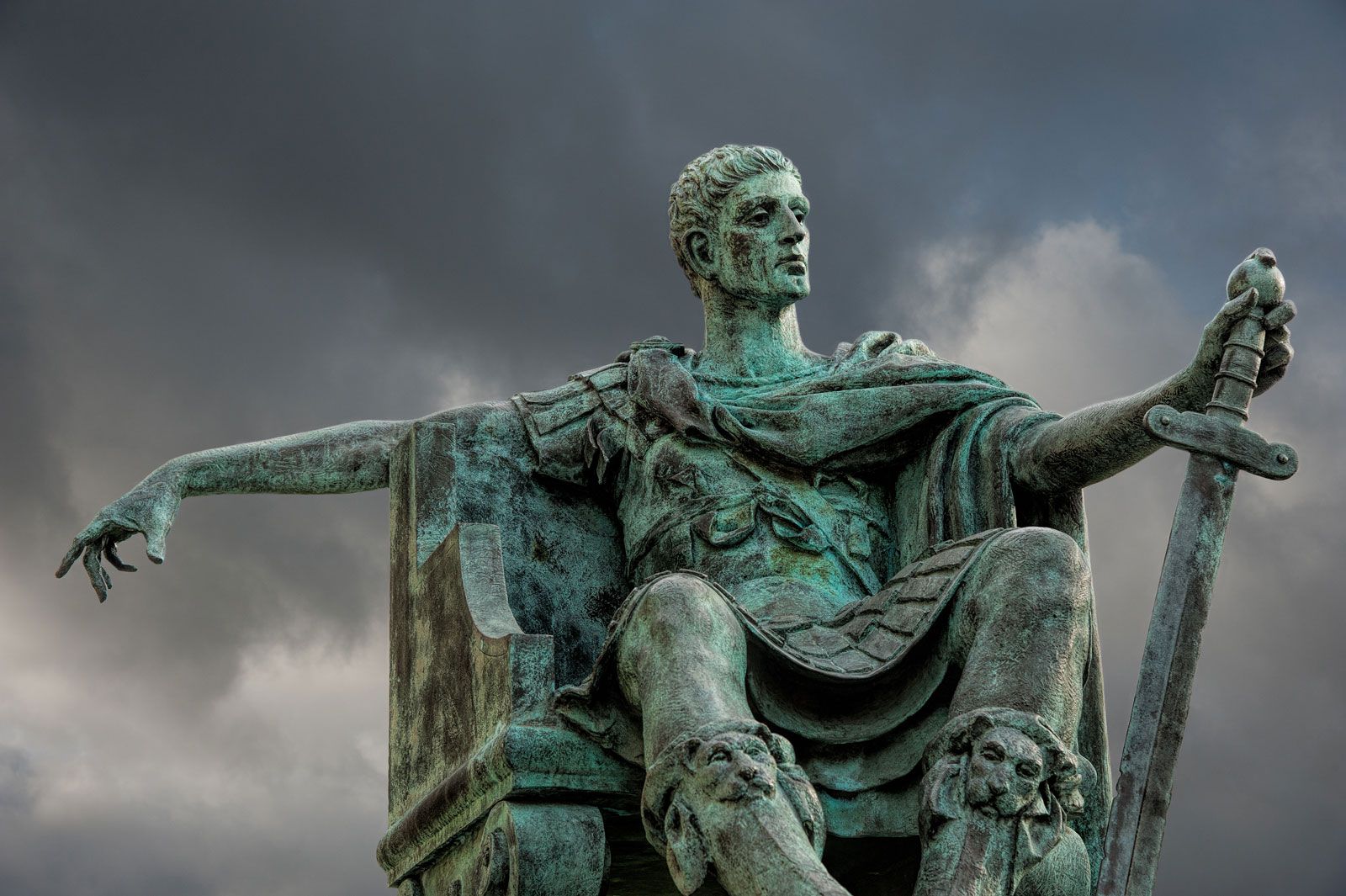
Part I: The Original Fire
The Jesus movement began as something genuinely dangerous to power. Not dangerous in the way Rome feared—there were no armies, no territorial claims—but dangerous in a more fundamental sense: it offered people a way of understanding themselves that didn’t require the state.
When Pilate asks about his authority, Jesus answers with words that would echo through centuries of political theology:
“My kingdom is not of this world.”
This wasn’t escapism. It was a radical decoupling of spiritual sovereignty from earthly power. The kingdom Jesus proclaimed couldn’t be taxed, couldn’t be conscripted, couldn’t be administered. It existed in a register that emperors couldn’t touch.
The Sermon on the Mount elaborates this vision. Against a background of Roman occupation and Jewish expectations of a military messiah, Jesus announces:
“Blessed are the meek, for they shall inherit the earth.”
As one scholar notes, Jesus was speaking directly to Zealots who wanted to establish God’s kingdom by force and Pharisees who expected supernatural conquest. Instead, he offered gentleness, patience, non-retaliation. This is not a political program that any state can use.
And the economic teaching was equally corrosive to institutional capture:
“You cannot serve both God and money.”
“Sell your possessions and give to the poor.”
“It is easier for a camel to go through the eye of a needle than for a rich man to enter the kingdom of God.”
Try building a church treasury on that. Try endowing monasteries. Try funding cathedrals.
The early movement held these tensions. But institutions have needs that movements don’t. And the transformation had already begun before the first emperor noticed Christianity existed.
Part II: Paul Plants the Seeds
Paul of Tarsus was Christianity’s first institution-builder. His letters, written decades before the Gospels were composed, created portable governance technology—standard procedures for communities scattered across the Mediterranean.
Some of what Paul wrote preserved the radical edge. But some of it laid the foundation for everything that followed.
Romans 13 is the text that would haunt Christian political thought forever:
“Let every soul be subject unto the higher powers. For there is no authority except that which God has established. The authorities that exist have been established by God. Consequently, whoever rebels against the authority is rebelling against what God has instituted.”
“For the one in authority is God’s servant for your good. But if you do wrong, be afraid, for rulers do not bear the sword for no reason.”
This is remarkable. Paul transforms obedience to the state from a pragmatic necessity into a theological duty. The Roman governor isn’t just powerful—he’s divinely appointed. Rebellion isn’t just dangerous—it’s sin.
Paul wrote this while Nero was emperor. Later Christian apologists would point to this as evidence of the teaching’s universal validity: if Paul could submit to Nero, surely we can submit to our rulers.
What Paul probably intended as survival advice for a tiny persecuted minority became, once Christianity had power, a blanket authorization for state authority. The text didn’t change. The context did. And suddenly “be subject unto the higher powers” meant something very different when Christians were the higher powers.
The mechanism here is what scholars call a “textual anchor”—a passage that can be cited to legitimate whatever arrangement currently exists. Paul couldn’t have anticipated Constantine. But Constantine’s theologians had Paul ready to hand.
Part III: The Constantinian Turn
For three centuries, Christianity grew in the margins. Persecuted intermittently, tolerated occasionally, it developed its own internal governance—bishops, councils, creeds—without state involvement.
Then, in 312, Constantine won the Battle of the Milvian Bridge. According to Eusebius, he’d seen a vision:
“After Constantine decided that he need to revere just one God rather than the multiple gods of the pagans, he prayed to this God—not knowing who he was—and was rewarded with a vision.”
Whatever actually happened, the political consequences were immediate. In 313, Constantine and his eastern counterpart Licinius issued the Edict of Milan:
“We thought fit... to grant both to the Christians and to all men freedom to follow whatever religion each one wishes.”
This sounds like religious liberty. It was also something else: legal recognition. Christians could now own property. Churches could receive donations. Bishops had legal standing. The infrastructure of institutional power became available.
Constantine didn’t just tolerate Christianity—he patronized it. He funded church construction. He exempted clergy from taxes. He involved himself in theological disputes, calling the Council of Nicaea in 325 to resolve the Arian controversy.
The emperor who convened the council that defined Christian orthodoxy was not yet baptized. He would wait until his deathbed. But he understood something crucial: unified religion meant unified empire. Doctrinal chaos threatened political stability.
Here we see the first iteration of a pattern that would repeat endlessly: the state discovers that stable meaning can stabilize populations. Religious authority, properly channeled, becomes administrative authority.
Part IV: Canon and Boundary
While emperors were discovering Christianity’s political utility, church leaders were solving their own governance problem: what counts as authoritative?
In 367, Athanasius of Alexandria issued his Easter letter listing the books that constituted scripture:
“Let no man add to these, neither let him take ought from these.”
This is the first surviving list that matches the modern New Testament. Athanasius wasn’t inventing the canon—these books had been widely used for generations. But he was closing it. Drawing a boundary. Creating an authorized library.
The canon is a control surface. Once you define which texts are scripture, you’ve defined the terrain on which all future arguments must occur. Heretics are now people who cite the wrong books—or who interpret the right books wrongly. And interpretation requires interpreters. A credentialed class. A clergy.
The move from “living tradition” to “closed canon” is subtle but decisive. It shifts authority from charismatic teachers to institutional guardians of text. The Holy Spirit still moves—but now it moves through approved channels.
Part V: The State Church
The Edict of Milan granted tolerance. Sixty-seven years later, Theodosius went much further.
The Edict of Thessalonica (380) made Nicene Christianity the official religion of the Roman Empire. Its language is worth reading carefully:
“It is our desire that all the various nations which are subject to our Clemency and Moderation should continue to profess that religion which was delivered to the Romans by the divine Apostle Peter.”
“All the various nations... subject to our Clemency.” This is imperial language. Religious identity is now a matter of state administration.
“We authorize the followers of this law to assume the title of Catholic Christians; but as for the others, since, in our judgment they are foolish madmen, we decree that they shall be branded with the ignominious name of heretics, and shall not presume to give to their conventicles the name of churches.”
The state now determines who counts as Christian. Heretics are “foolish madmen”—the emperor’s judgment. Their gatherings cannot be called “churches”—a legal designation that the state controls.
“They will suffer in the first place the chastisement of the divine condemnation and in the second the punishment of our authority which in accordance with the will of Heaven we shall decide to inflict.”
Divine condemnation and imperial punishment. Heaven and the tax collector are now aligned.
This edict marks a transformation so complete that it’s hard to see across: the religion that began with “my kingdom is not of this world” now has its boundaries enforced by the world’s most powerful empire. The meek didn’t inherit the earth. The emperor claimed it for them—and for himself.
Part VI: Augustine and the Theology of Coercion
The question immediately arose: is force legitimate? Can you compel belief?
Early Christians had been on the receiving end of persecution. Many instinctively said no. But the church now had power, and power creates its own logic.
Augustine of Hippo—brilliant theologian, sensitive pastor—developed the theoretical framework for religious coercion. His target was the Donatist schism in North Africa, but his arguments would justify centuries of inquisition.
Initially, Augustine held that “men should be brought to serve God by instruction rather than by fear of punishment.” He changed his mind.
By 408, he was writing to the Donatist bishop Vincentius:
“You are of opinion that no one should be compelled to follow righteousness; and yet you read that the householder said to his servants, ‘Whomsoever ye shall find, compel them to come in.’”
The parable of the Great Banquet (Luke 14:23) became the proof-text for coercion. Jesus tells a story about a host whose invited guests refuse to come, so he sends servants into the highways to bring in the poor, the maimed, the blind. “Compel them to come in.”
Augustine read this literally. The “compulsion” was physical force, applied by the state at the church’s request:
“It is better indeed that men should be brought to serve God by instruction than by fear of punishment or by pain. But because the former means are better, the latter must not therefore be neglected.... Many must often be brought back to their Lord, like wicked servants, by the rod of temporal suffering.”
The editor of Augustine’s anti-Donatist writings noted what followed:
“Starting with a forced interpretation of the words ‘Compel them to come in,’ he enunciates principles of coercion which, though in him they were subdued and rendered practically of little moment by the spirit of love which formed so large an element in his character, yet found their natural development in the despotic intolerance of the Papacy, and the horrors of the Inquisition.”
Augustine was probably sincere. He genuinely believed coercion could save souls. But sincerity doesn’t prevent mechanisms from operating. The theological permission he granted outlived his personal gentleness by a thousand years.
Part VII: The Monastic Machine
Monasticism began as escape from institutional Christianity. The desert fathers fled to Egypt precisely to avoid the compromised church of the cities. They wanted direct encounter with God, unmediated by hierarchy.
But monasteries became institutions too—and remarkably effective ones.
The Rule of St. Benedict (c. 530) transformed ascetic impulse into organizational technology. Its prologue begins:
“Listen, my son, and incline the ear of your heart.”
Beautiful. Spiritual. And followed by sixty-six chapters of detailed regulations covering every aspect of communal life: when to pray, how to eat, what to wear, how to correct faults, how to admit new members, how to manage property.
The Rule created a discipline machine. Monks learned obedience, literacy, timekeeping, record-keeping, agriculture, manuscript copying. They became the administrative class of medieval Europe. When kings needed administrators who could read and write, they recruited from monasteries.
The pathway from “incline the ear of your heart” to “run the royal treasury” wasn’t accidental. Spiritual discipline produces disciplined people. Disciplined people are useful to power. Power notices.
Part VIII: Confession as Surveillance
The Fourth Lateran Council (1215) was medieval Christianity at the height of its institutional power. Pope Innocent III gathered 71 patriarchs and metropolitans, 412 bishops, and 900 abbots. Emperors sent representatives. Seventy canons were promulgated.
Canon 21 is the one that matters for our purposes:
“All the faithful of both sexes shall after they have reached the age of discretion faithfully confess all their sins at least once a year to their own parish priest and perform to the best of their ability the penance imposed, receiving reverently at least at Easter the sacrament of the Eucharist.”
And the enforcement mechanism:
“Otherwise they shall be cut off from the Church during life and deprived of Christian burial in death.”
Confession existed before 1215. But Lateran IV made it mandatory and regular—at least once a year, to your own parish priest. This created an information network of extraordinary scope.
Your parish priest now received annual reports on your inner life. Not just your actions—your thoughts, your desires, your doubts. The sacrament required complete disclosure: “faithfully confess all their sins.”
Canon 21 also bound priests to secrecy, on pain of deposition. This wasn’t just protection for penitents—it was protection for the system. Confession only works as an information-gathering technology if people trust it enough to actually confess. The seal of confession made the system function.
Michel Foucault argued that confession became the template for Western truth-production:
“The truthful confession was inscribed at the heart of the procedures of individualization by power.”
The technology migrated. Confession to priests became confession to doctors, to psychiatrists, to teachers, to HR departments. The assumption that you must articulate your inner truth to an authorized listener—and that this articulation gives them legitimate power over you—is a Christian inheritance that secular institutions absorbed without noticing.
Part IX: The Complete Apparatus
By the high medieval period, Christianity had become a total system. Let’s inventory the components:
Canon: A closed set of authoritative texts, interpreted by authorized interpreters.
Creed: A membership test. Lateran IV opens with a creed: “We firmly believe and openly confess that there is only one true God...” To be Christian is to affirm specific propositions. Belief becomes administrable.
Clergy: A credentialed professional class, trained in approved institutions, authorized to perform rituals that laity cannot perform. The sacraments are gatekept.
Courts: Canon law is real law, with real courts, real judges, real punishments. The church has jurisdiction over marriage, inheritance, oaths, heresy.
Confession: Mandatory self-disclosure to authorized recipients. Information flows up the hierarchy.
Calendar: The church controls time—feast days, fast days, the hours of prayer. The rhythm of life is ecclesiastically structured.
Property: Churches, monasteries, and religious orders hold vast wealth. Endowments, tithes, donations. Economic power reinforces spiritual authority.
Identity: To be excommunicated is to be cast out of society. “Deprived of Christian burial” means your corpse is treated as refuse. The boundary between Christian and non-Christian is socially total.
This is what institutional capture looks like at full development. Every element reinforces the others. Property funds the clergy who interpret the canon who enforce the creed who administer the courts who control the calendar who manage confession who maintain the boundary.
The message of the Sermon on the Mount hasn’t disappeared. It’s still in the canon. Monks still read it. Preachers still cite it. But it’s embedded in an apparatus that systematically selects for interpretations compatible with institutional survival.
“Blessed are the meek” survives as a spiritual teaching precisely because the institution doesn’t depend on meekness. The meek are blessed—in heaven. On earth, the church has lawyers.
Part X: The Secular Afterlife
The Protestant Reformation attacked many of these structures. Confession was rejected. Monasteries were dissolved. Clerical celibacy was abandoned. The Bible was translated into vernaculars.
But the Reformation didn’t escape institutional capture—it replicated it under different management. Protestant state churches emerged: Anglican, Lutheran, Reformed. Canon law was replaced by civil law that incorporated Christian norms. Mandatory church attendance replaced mandatory confession.
And the deeper patterns migrated into secular institutions:
Confession → medical history, psychiatric intake, job interviews that probe your character, social media that demands authentic self-disclosure
Creeds → loyalty oaths, mission statements, DEI trainings that require affirmation of specific propositions
Canon → curricula, credentialing exams, approved methodologies, “the literature”
Clergy → credentialed professionals in every field, experts whose authority derives from institutional certification
Courts → HR tribunals, Title IX offices, professional licensing boards
The specific content changed. The structural position remained. We still assume that you must confess your truth to authorized listeners, that membership requires affirming correct beliefs, that authority flows from institutional certification.
Conclusion: What This Means
This history isn’t an argument against Christianity. Sincere Christians can read it and remain sincere Christians—recognizing that institutional distortion doesn’t invalidate the original insight, even as it complicates the tradition’s relationship to it.
But it is an argument against naivety about how meaning becomes management.
The pattern works like this:
-
A genuine insight appears—something that helps people, that opens new ways of being
-
The insight attracts followers; a community forms
-
The community needs coordination; rules develop
-
The rules need enforcers; a professional class emerges
-
The professionals have institutional interests that may diverge from the original insight
-
External powers notice that coordinated meaning-making is useful for their purposes
-
Selection pressure favors interpretations that serve institutional survival and external patronage
-
The insight survives as text, but the apparatus selects which interpretations get amplified
This happened to Christianity. It happens to every movement that achieves institutional scale. It’s happening right now to movements you care about.
The diagnosis isn’t cynicism. Augustine was sincere. Many medieval bishops were sincere. The cardinals at Lateran IV weren’t plotting to pervert the Gospel. They were solving governance problems with the tools available, and the solutions they found had predictable effects.
The question isn’t whether capture will happen—it will. The question is whether you can see it happening, name it, and maintain some relationship to the original fire even as the institution builds its hearth around it.
“My kingdom is not of this world.”
The sentence survives. The kingdom it named has proven harder to institutionalize than the church that preserved the sentence. Perhaps that’s the point.