The Ideological Trap for the Left
Published 2026-01-14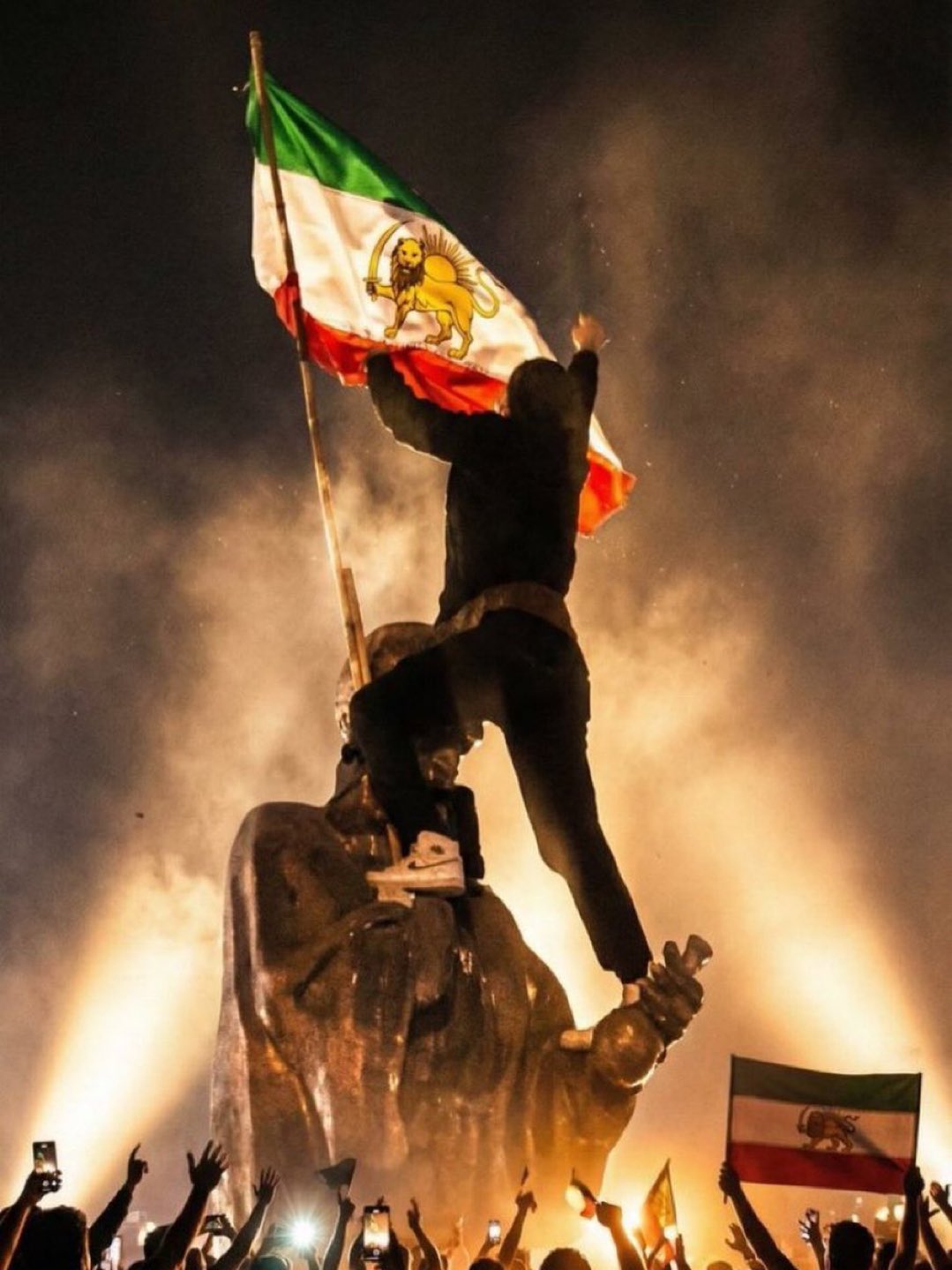
In early January 2026, two events on opposite sides of the world converged to expose a structural crisis in left-liberal political thought. On January 3rd, U.S. special forces captured Venezuelan dictator Nicolás Maduro in a nighttime raid on Caracas, extracting him to face narco-terrorism charges in New York. Five days later, protests that had begun in Tehran’s Grand Bazaar over currency collapse spread to all 31 Iranian provinces, with demonstrators chanting for the fall of the Islamic Republic and the return of the Shah’s son.
The American left’s response to both events has been characterized by awkwardness, proceduralism, and a conspicuous absence of moral clarity. This is not accidental. These events represent the terminal phase of a foreign policy framework that has been decaying for two decades—one that reflexively codes American power as imperialism, treats “resistance” movements as inherently legitimate, and substitutes process concerns for substantive judgment about good and evil in the world.
The trap is now sprung. To oppose Trump is to appear to defend dictators. To support the outcomes is to validate methods the left has spent years condemning. There is no clean exit.
I. Venezuela: The Proceduralist Dodge
The facts of Maduro’s rule are not in serious dispute. He claimed victory in a 2024 election that international observers called fraudulent and that the opposition—with actual vote tallies—showed he lost by roughly 40 points. His government has been indicted by U.S. prosecutors for narco-terrorism. His security forces killed protesters. Under his rule, Venezuela experienced the largest peacetime economic collapse in Latin American history, driving seven million people—nearly a quarter of the population—to flee the country.
When Trump ordered the operation that removed him, the Democratic response focused almost entirely on process. Senator Mark Warner, vice chairman of the Intelligence Committee, asked: “Does this mean any large country can indict the ruler of a smaller adjacent country and take that person out?” Senator Tim Kaine complained about the lack of congressional notification. Legal scholars debated whether the operation violated international law.
These are not illegitimate concerns. The precedent is genuinely troubling. The lack of a post-Maduro plan echoes Iraq. Trump’s stated intention to “run the country” and extract its oil is neo-colonial in the most literal sense. The dismissal of María Corina Machado—the democratic opposition leader with 72% approval who won the Nobel Peace Prize—because she didn’t pass the award to Trump reveals the operation was never really about democracy.
And yet.
The proceduralist critique, however valid on its own terms, creates an overwhelming impression of defending the indefensible. When the immediate response to a dictator’s capture is to worry about the captor’s methods, you have implicitly accepted a framework in which the dictator’s victims are secondary to geopolitical etiquette. Warner’s question—”Does this mean any large country can indict the ruler of a smaller adjacent country?”—is technically reasonable. But it sounds like a defense of sovereign immunity for narco-traffickers who steal elections.
This is the trap. The left has no language for saying: “Maduro was a monster and his removal is good, but the method and the actors are bad, and the likely outcome is also bad.” Such nuance requires moral confidence that has been systematically trained out of progressive discourse. When you spend years arguing that American power is inherently suspect, you lose the ability to acknowledge when American power achieves something worthwhile—even by accident, even for the wrong reasons.
The deeper problem is that proceduralism is not a foreign policy. It is the absence of one. Congressional authorization, international law, multilateral consensus—these are constraints on action, not reasons for action. They answer the question “how should we act?” but not “what should we want?” When the only coherent progressive position is “whatever Trump does is wrong because of how he does it,” you have ceded the substantive terrain entirely.
II. Iran: The Anti-Imperial Boomerang
If Venezuela exposes the limits of proceduralism, Iran exposes something deeper: the collapse of the “anti-imperialist” framework that has organized much of left-liberal thought about the Middle East since 1979.
The Islamic Revolution was, for a certain strand of Western leftism, a model of Third World resistance to American hegemony. Iran’s support for Hezbollah, Hamas, and the Assad regime was understood—if not endorsed—as “resistance” to Israeli and American power. The nuclear standoff was framed as the imperial core trying to deny an independent nation the same capabilities the West already possessed. The maximum pressure campaigns of Trump’s first term were condemned as collective punishment of ordinary Iranians.
Now ordinary Iranians are in the streets, and what they are saying does not fit the script.
“No Gaza, No Lebanon, my life for Iran.”
“Death to the dictator!”
“Death to Khamenei!”
“Long live the Shah!”
“This is the last battle! Pahlavi will return!”
These chants, heard in protests from Tehran to Ilam to Zahedan, represent a direct repudiation of the Islamic Republic’s entire ideological foundation. The protesters are not calling for reform, or for better implementation of revolutionary ideals, or for a more humane version of theocratic rule. They are rejecting the revolution itself. They are calling for Reza Pahlavi—the son of the Shah whom Khomeini overthrew. They are demanding not resistance to the West, but integration with it.
The symbolism is unmistakable. In Mashhad, protesters lowered a massive flag of the Islamic Republic and ripped it in half. Across the country, demonstrators have waved the Lion and Sun flag—the pre-revolutionary standard that the Islamic Republic replaced—as a sign of monarchist aspirations. In London, a protester climbed the Iranian embassy to tear down the regime’s flag and replace it with the Lion and Sun. The social media platform X changed its Iran flag emoji from the Islamic Republic flag to the Lion and Sun design.
At solidarity rallies from Los Angeles to London, Iranian diaspora protesters have burned pictures of Ayatollah Khamenei. Some have carried Israeli flags—not as provocation, but as genuine alignment. Reza Pahlavi himself, based in Maryland, has proposed “Cyrus Accords” to normalize relations between a post-Islamic Republic Iran and Israel, building on the Abraham Accords framework. The Pahlavi era, protesters recall, featured close ties with both America and Israel.
Perhaps most telling is what CNN reported from Iranian-Americans reflecting on their school days under the regime: when teachers would instruct students to chant “Death to Israel,” the students would say “the exact opposite.” A generation raised under mandatory anti-Zionism has, in the words of one observer, “completely moved on from the world that was forced on us.”
Israel’s Mossad issued a statement during the protests: “We are with you. Not only from a distance and verbally. We are with you in the field.” Israeli Prime Minister Benjamin Netanyahu said Israelis “identify with the struggle of the Iranian people.” These statements of solidarity from the regime’s designated enemy were not rejected by protesters—they were welcomed.
The contrast with Palestinian reaction is instructive. NPR reported that Palestinians “hope the Iranian regime stays in place and the protests die down soon.” As one Palestinian driver told reporters: “Who else has been able to fight Israel? It has been Iran, Hamas and Hezbollah.” The Iranian protesters’ rejection of the “axis of resistance” framework is, from this perspective, a betrayal. The people who were supposed to be grateful for Iranian sacrifice instead view that sacrifice as the cause of their misery.
The significance of this cannot be overstated. For forty-five years, Western progressives have been told—and have largely believed—that the 1979 revolution represented the authentic voice of the Iranian people against American imperialism. The Shah was a U.S. puppet; his overthrow was liberation; the Islamic Republic, whatever its flaws, represented genuine Iranian sovereignty.
The Iranian people are now delivering their verdict on that narrative, and it is damning.
The bazaaris—the merchant class whose alliance with the clerics made the 1979 revolution possible—have turned against the regime. Students are marching alongside shopkeepers and oil workers. When Reza Pahlavi called for Iranians to chant together at 8 PM on January 8th, they answered. The internet blackout that followed—described as unprecedented in scale—testifies to the regime’s recognition that it has lost the argument.
What are progressives supposed to do with this? The honest answer is: they don’t know.
The protests cannot be framed as American meddling. They began organically over currency collapse and spread because of genuine grievances. The protesters themselves reject the “resistance” framework—they explicitly blame the regime’s foreign adventures for their economic misery. The most prominent opposition figure is a monarchist. The demonstrators are dying under a government that Western progressives spent years defending from “maximum pressure.”
The instinct, predictably, has been silence. As of mid-January, progressive commentary on the Iranian uprising has been sparse and cautious. The same voices that amplified the 2020 George Floyd protests, that celebrated the Arab Spring (before it went wrong), that championed every movement that could be framed as resistance to Western or right-wing power—those voices have little to say about Iranians dying for demanding what Americans take for granted.
This silence is the sound of an ideology encountering its own contradictions.
III. The Genealogy of Incoherence
How did the American left arrive at a position where it cannot straightforwardly celebrate the fall of dictators? The answer requires tracing the decay of three distinct foreign policy traditions that once provided coherent frameworks for engagement with the world.
Liberal internationalism—the belief that America should promote democracy, human rights, and rules-based order—was the dominant Democratic framework from Truman through Clinton. It provided clear criteria for judgment: democracies good, dictatorships bad; human rights universal, not culturally relative; American power legitimate when exercised through institutions and for liberal ends.
This framework was shattered by Iraq. The invasion was justified in liberal internationalist terms—removing a dictator, promoting democracy, enforcing international norms against WMD proliferation—and it produced catastrophe. A generation of progressives drew the lesson that liberal internationalism was either naive or fraudulent: a cover story for imperial resource extraction, a “freedom agenda” that somehow always aligned with strategic interests.
Anti-imperialism—the belief that American power is inherently destructive and that movements resisting it deserve sympathy—filled the vacuum. This framework had always existed on the socialist left, but Iraq mainstreamed it. If the “good” intervention produced Abu Ghraib and ISIS, perhaps there were no good interventions. If democracy promotion was a lie, perhaps the regimes it targeted had legitimacy. If America was the empire, those who resisted it were freedom fighters—or at least had grievances worth understanding.
This framework made sense of opposition to the Iraq War, to drone strikes, to support for Saudi Arabia and Israel. But it contained a fatal flaw: it provided no way to judge the movements it romanticized. If “resistance” to American power was inherently legitimate, what happened when the resisters were theocrats who hanged homosexuals? Kleptocrats who starved their people? Militias who murdered civilians? The anti-imperialist framework had no answer except to change the subject back to American sins.
Proceduralism—the retreat to process—emerged as the compromise position. Unable to defend liberal internationalism after Iraq, unwilling to follow anti-imperialism to its conclusions, mainstream Democrats settled on a framework of constraints without content. Don’t act without congressional authorization. Respect international law. Build coalitions. Follow the rules.
This permitted criticism of Republican unilateralism without requiring any positive vision of what American power should achieve. It was a foreign policy for people who had lost confidence in foreign policy—a way to object to how things were done without having to say what should be done.
The problem is that proceduralism generates absurdities when confronted with genuinely bad actors. If Maduro steals an election and the proper procedure is to seek congressional authorization and UN approval before doing anything, and Congress won’t authorize and the UN won’t approve, then the proceduralist answer is: do nothing. The dictator wins by default. Process becomes a veto on justice.
IV. The Inversion of Power Analysis
One of the central conceits of contemporary progressive thought is “power analysis”—the practice of evaluating claims and actors based on their position in hierarchies of power. The powerful are suspect; the powerless are sympathetic; claims made by the powerful against the powerless deserve scrutiny; claims made by the powerless against the powerful deserve amplification.
This framework works reasonably well for domestic politics, where power differentials are relatively stable and clearly mapped. It fails catastrophically in international relations, where power is contextual, distributed, and constantly shifting.
Consider Iran. In the progressive power analysis, Iran is the weaker party in its confrontation with America and Israel. It is sanctioned, threatened, attacked. Its nuclear scientists are assassinated. Its military commanders are droned. By the logic of power analysis, Iran deserves sympathy as the underdog resisting hegemonic force.
But within Iran, the Islamic Republic is the powerful party. It commands the IRGC, the Basij, the intelligence services, the courts. It controls the economy, the media, the internet. It hangs protesters, jails journalists, mandates hijab by force. The people in the streets of Tehran are the powerless; the regime crushing them is the powerful.
Power analysis, properly applied, should generate sympathy for Iranian protesters against their government. But because that government is also America’s enemy, the frameworks collide. Supporting the protesters means aligning with American and Israeli interests. Opposing the regime means endorsing the maximum pressure campaign. The progressive mind, trained to locate America as the source of injustice, cannot process a situation where American enemies are also the oppressors of their own people.
Venezuela presents the same inversion. Maduro styled himself as a socialist resisting American imperialism, the heir to Chávez, the champion of the poor against oligarchy. By the old power analysis, he was the good guy—or at least the less-bad guy compared to Washington and its corporate interests. But Maduro’s victims were overwhelmingly poor Venezuelans: the ones who couldn’t flee, who watched their savings evaporate, who died for lack of medicine, who were shot for protesting. The imperialism they experienced was internal.
The power analysis framework cannot handle the possibility that American enemies might be worse than America. It was built to critique American power, not to evaluate the alternatives. When the alternatives are theocracy, kleptocracy, and narco-states, the framework has nothing to say.
V. The Silence of the Activists
Perhaps the most revealing indicator of ideological collapse is what people don’t say.
The Iranian uprising has generated minimal activist energy in the American left. There have been no large-scale solidarity protests. No viral social media campaigns. No celebrity statements. No flood of think-pieces on how to support the revolution. The contrast with other recent movements is stark.
When protests erupted in Hong Kong, progressives were cautious—China’s power demanded careful calibration—but there was at least engagement. When George Floyd was murdered, the response was immediate and overwhelming. When women in Afghanistan faced Taliban rule, there was anguished commentary (if limited action).
Iranian women are being killed for the same demands that animated the 2022 Woman, Life, Freedom movement—and that movement received substantial Western progressive support. What has changed?
The answer is political context. In 2022, the protests could be understood as a human rights issue separable from U.S.-Iran geopolitics. Trump was out of office. The nuclear deal was being renegotiated. Supporting Iranian protesters didn’t mean supporting American hawks.
In 2026, the contexts have merged. Trump is president and threatening military action. The “maximum pressure” campaign has resumed. Supporting the protesters now means—or appears to mean—supporting Trump’s Iran policy. For an activist culture that has defined itself in opposition to Trump, this is ideologically unbearable. Better to say nothing.
The Venezuela silence follows the same logic. Celebrating Maduro’s fall means celebrating a Trump military operation. For people who marched against the Muslim ban, who protested family separation, who spent four years treating Trump as an existential threat to democracy—how can they now cheer his commandos? The contradiction is too sharp. Silence is the only refuge.
But silence is not neutrality. When progressives are loud about injustices committed by American allies and quiet about injustices committed by American enemies, they have made a choice. The choice is legible to everyone: to Iranians watching Western activists ignore their revolution, to Venezuelans watching American Democrats quibble about procedure while they celebrated Maduro’s capture, to observers everywhere who notice that progressive outrage is selectively activated.
This selectivity corrodes the moral authority that progressives claim. If human rights matter, they matter in Iran. If democracy matters, it matters in Venezuela. If the judgment of ordinary people matters, it matters when they reject the ideologies that Western progressives found sympathetic. You cannot champion “the people” only when the people agree with you.
VI. The Right’s Counter-Trap
None of this analysis should be taken as an endorsement of the right’s approach, which has its own profound incoherence.
Trump’s Venezuela operation was not about democracy—he rejected the democratic opposition and is working with regime insiders. It was not about human rights—he’s simultaneously deporting Venezuelan refugees who fled Maduro’s tyranny. It was not about the rule of law—he bypassed Congress, violated international law, and announced plans to extract oil for American benefit. It was about spectacle, personal gratification, and resource acquisition dressed in the language of justice.
The right’s Iran posture is similarly hollow. Trump threatens military action to protect protesters, but his administration’s previous maximum pressure campaign impoverished ordinary Iranians while strengthening hardliners. The Muslim ban of his first term targeted Iranians indiscriminately. The solidarity is new, convenient, and almost certainly temporary.
More broadly, the right’s foreign policy is not a framework but a set of impulses: strength, dominance, extraction, unpredictability. It can produce good outcomes accidentally—Maduro’s removal, pressure on the Iranian regime—but not systematically. It cannot build alliances, sustain commitments, or construct durable orders. It is purely tactical, not strategic.
The left’s trap, then, is not that the right is correct. It’s that the left has no compelling alternative to offer. When your only response to right-wing action is procedural objection, you have implicitly accepted that the right is the only actor capable of action. You become the party of constraint, not the party of vision. You can slow things down, but you cannot propose where things should go.
VII. Toward Reconstruction
What would a coherent progressive foreign policy look like? This essay has been primarily diagnostic, but some elements of reconstruction are visible in the rubble.
First, recover moral clarity about dictatorships. Maduro was a dictator. The Islamic Republic is a theocratic tyranny. These are not complicated cases. The left’s inability to say so clearly—without immediately pivoting to American sins—reflects a catastrophic loss of moral confidence. You can acknowledge that America has supported dictators, that American interventions have often failed, that American motives are frequently mixed, while still maintaining that some regimes are simply bad and their people deserve better.
Second, listen to the people you claim to champion. Iranians are telling us what they want: not reform of the Islamic Republic, but its end. Venezuelans are telling us what they want: not managed decline of Chavismo, but freedom from it. When the objects of Western progressive sympathy reject the frameworks Western progressives have constructed for them, the frameworks should change—not the people.
Third, develop positive criteria for action. Proceduralism fails because it only tells you what you can’t do, not what you should do. A serious foreign policy requires judgments about when intervention is warranted, what kinds of intervention work, what outcomes are desirable, and what costs are acceptable. These are hard questions, but refusing to answer them is itself an answer—one that defaults to the status quo.
Fourth, accept that American power can be used for good. This is perhaps the hardest recovery for a left that has spent two decades documenting American crimes. But the lesson of Iraq should not be “never intervene”—it should be “intervene wisely, with clear goals, realistic plans, and genuine commitment to the people affected.” The lesson of Venezuela should not be “Maduro was defensible”—it should be “even a reckless intervention can remove a monster, but removal is not reconstruction.”
Fifth, disentangle analysis from alliance. The Trump administration can be wrong about almost everything and right about Maduro. Iranian protesters can align with American interests and still deserve support. The enemy of your enemy is not your friend—and the friend of your enemy is not necessarily your enemy. International politics is not a team sport where you must oppose whatever the other side supports.
VIII. The Costs of Incoherence
The immediate political cost of progressive foreign policy incoherence is electoral. As discussed in the companion analysis, these events create no clean narrative for Democrats. The proceduralist critique sounds like defending dictators. Silence sounds like indifference. The only winning move—enthusiastically supporting democratic movements while criticizing Trump’s methods—requires a moral vocabulary the left has largely abandoned.
But the deeper cost is intellectual and cultural. A political movement that cannot generate principled enthusiasm for people fighting tyranny has lost something essential. The left’s historic claim to moral authority rested on its identification with liberation movements—with slaves against slaveholders, workers against bosses, colonies against empires, civil rights marchers against segregationists. When that identification becomes conditional on geopolitics, when liberation movements are scrutinized for their alignment with American interests before being endorsed, the claim to moral authority rings hollow.
Young Iranians watching Western progressives parse the geopolitical implications of their revolution—rather than simply supporting it—will draw conclusions. Young Venezuelans watching American Democrats debate congressional notification procedures while they celebrate in the streets will draw conclusions. The conclusion is that progressive solidarity is a variable, not a constant. That it depends on who is in the White House, not who is in the streets.
This is not a foundation for a political movement. It is not even a foundation for a coherent worldview. It is an accumulation of tactical positions held together by negative partisanship—opposition to the American right—rather than positive commitment to human freedom.
The events of January 2026 did not create this crisis. They revealed it. The trap was laid years ago, when the left decided that anti-imperialism meant reflexive opposition to American power rather than principled opposition to domination wherever it occurs. When it decided that power analysis meant sympathy for the weak against the strong, except when the weak were oppressed by American enemies. When it decided that process mattered more than outcome, and that the safest position was always to counsel restraint.
The trap is sprung. Millions of Iranians are marching for freedom under a communications blackout, dying at the hands of a regime the American left spent years defending from “maximum pressure.” A Venezuelan dictator sits in a New York jail, removed by an American president whose methods the left abhors but whose results it cannot honestly regret.
There is no comfortable place to stand. The only way out is through—through an honest reckoning with the failures of the old frameworks, through the hard work of building new ones, through the humility to admit that the people you claimed to speak for have spoken, and they have said something you did not expect.
The Iranian protesters chanting “No Gaza, No Lebanon, my life for Iran” are not asking for Western progressive approval. They are not calibrating their slogans to American political contexts. They are risking their lives for a vision of freedom that owes nothing to academic theories of anti-imperialism and everything to the simple human desire to live without fear.
The least the American left can do is listen. The most it can do is help. But first, it must escape the trap it built for itself—the trap of caring more about who acts than what is achieved, of opposing American power so reflexively that it cannot recognize when that power’s enemies are worse, of speaking for the oppressed while ignoring what the oppressed actually say.
The hour is late. The protests continue. The choice is binary: solidarity or silence.
Choose.