Tyler Durden: How They Broke You
Published 2026-02-07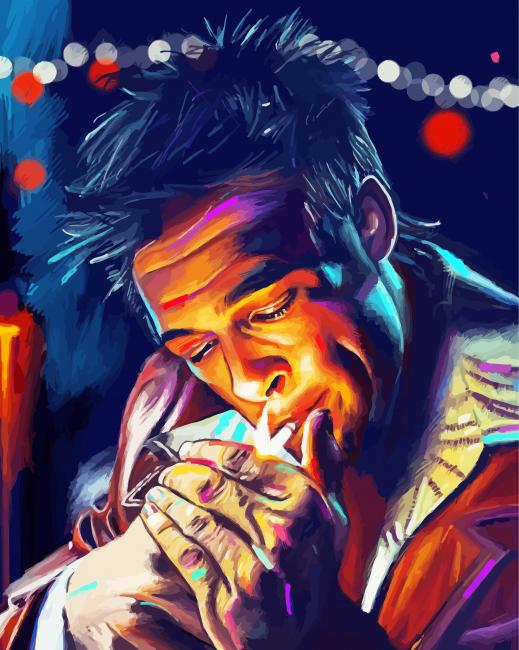
Look at you. Sitting there with your oat milk and your anxiety diagnosis and your therapist’s number saved as a favorite contact. You’ve got a $200-an-hour professional listener, a medicine cabinet that rattles when you walk past it, and an identity you update more often than your phone.
You think you came like this. Factory defect. Bad brain chemistry. Genetic predisposition toward sadness.
No. Somebody did this to you. And they’re still billing you for it.
It starts with God. Not whether He’s real — that’s above your paygrade and mine. What matters is what happened when they killed the idea of Him.
A German with a mustache and syphilis saw it coming a hundred fifty years ago. He said God is dead and we killed him. And he didn’t high-five anyone. He was terrified. Because he understood that the whole architecture — the reason to get married, to have kids, to not walk off a bridge on a Tuesday — all of it was bolted to a foundation they’d just dynamited.
He said: now we have to build something that can hold the weight.
Nobody built anything. They just studied the crater. Wrote papers about the crater. Got tenure for describing the crater. And eventually they started teaching that craters were all there ever was. That the building was a myth. That the blueprints were oppression.
The first demolition crew was French. Of course it was French.
Chain-smoking intellectuals in black turtlenecks. They took apart every load-bearing wall in Western civilization, then stood in the rubble sipping espresso and calling it liberation.
One of them told you that everything is a prison. The school is a prison. The hospital is a prison. The family is a prison. Your bones are a prison. And he was partly right, which is what made him so dangerous. A lie that’s ninety percent true is worse than one that’s all lie. You can spot the all-lie. The ninety-percent lie moves in with you. It does dishes. It starts finishing your sentences.
So what did he build instead? Nothing. He handed you a vocabulary for paranoia and walked away. Left you standing in the ruins like a guy whose contractor demolished the house and then went to lunch.
Oh — and this same man, this patron saint of your sophomore awakening? He signed a petition to legalize sex with children. He cheered for Mao while millions starved. But that part doesn’t make the syllabus, does it. That part doesn’t fit on the tote bag.
Another one told you meaning itself doesn’t exist. Every word undermines itself. Nothing refers to anything. Language is just a dog chasing its own tail in a hall of mirrors. He wrote this in books. That he sold. For money. The irony didn’t kill him but it should have.
These men lived well. Endowed chairs. Lecture circuits. They lived as if things mattered, as if some ideas were better than others, as if identity was stable enough to cash a royalty check. The philosophy was for you. The nihilism was retail. They kept wholesale meaning for themselves.
Their students were worse. Because the French were at least interesting. The students were just productive. They scattered across every discipline carrying the same parlor trick:
Find something that works. Call it “constructed.” Dissolve it. Diagnose the collapse. Publish. Repeat.
They did it to gender. Some woman — and I use the term knowing she’d object to it — told you that womanhood doesn’t exist. That manhood doesn’t exist. That you are an empty stage performing a script written by power, and there is no you behind the mask, and the mask can be swapped for any other mask, and if you’re confused that’s because you’re waking up.
Your grandfather didn’t come out of the womb knowing how to change a tire. Fine. Gender is partly learned. But “partly learned” doesn’t get you a book deal. So she dissolved the whole thing. No nature. No biology. No ground. Just turtles all the way down, and every turtle is a social construct, and also turtles are a patriarchal metaphor.
Then she acts surprised when a generation of kids can’t figure out what they are. Thirty years of telling young people the self is a fiction and the body is a rough draft — and when the dysphoria tsunami hits, she calls it liberation. Like a arsonist showing up at the fire and claiming credit for all the light.
Here’s the formula, and they teach it everywhere: your feelings are absolutely sacred AND entirely manufactured by systems of power. Both at the same time. Honor your inner truth AND understand that your inner truth was installed by oppression. Try to hold that in your head. Try to build a Tuesday on it.
You can’t. That’s not a bug. That’s the feature. The formula doesn’t produce people. It produces patients.
They did it to race. Wrote bestsellers telling you that if you feel guilty you’re racist and if you don’t feel guilty you’re more racist and the only acceptable posture is permanent groveling self-audit that never reaches a verdict. They cranked racial consciousness to a frequency that makes dogs bark and then diagnosed the “racial tension” like weathermen studying a hurricane they seeded from a plane.
They did it to trauma. This one’s the masterpiece.
They taught you that you’re made of glass. That words are violence. That you carry wounds from things that happened to your grandparents. Your great-grandmother had a bad day in 1943 and it’s in your cells now, and that’s why you can’t handle the barista spelling your name wrong.
The DSM used to require something actually terrible to happen to you. Warzone terrible. Car-wreck terrible. Now a sarcastic email counts. Now hearing about someone else’s bad day counts. They called it “vicarious trauma” and they said it with tenure.
And the treatment? The treatment never ends. You’re never healed. You’re always “doing the work.” You’re always “in process.” There’s no graduation because graduation means losing the patient and losing the patient means losing the billing code. Your therapist doesn’t want you fixed. Your therapist wants you Thursday at four.
The body doesn’t keep the score. The industry keeps the score. And the score is denominated in dollars.
They did it to education. Told teachers that teaching kids to read the classics is violence. The only real education is “liberation” — which means teaching children to critique a civilization they haven’t learned yet. You cannot review a restaurant you’ve never eaten at. But they skipped the meal and went straight to the Yelp review.
Three generations now. Three generations of people who can deconstruct anything and build nothing. Who can tell you exactly what’s wrong with every institution while constructing none.
Your great-grandmother could build a fire, deliver a baby, and bury a husband. You can spot a microaggression in a Pixar movie.
Congratulations. You’ve been educated.
They did it to the future. Told twelve-year-olds the planet will be on fire before they’re forty. Told you having children is a carbon crime. Then they studied the “eco-anxiety” like it was a naturally occurring weather pattern. As if the children spontaneously decided the future was cancelled, all by themselves, without anyone screaming it into their faces every day since kindergarten.
But the philosophers only drew the blueprints. Someone else built the cage.
The cage was built in Silicon Valley. By guys in Patagonia vests who microdose psilocybin and send their own kids to Waldorf schools where the tablets are made of wood.
The algorithm doesn’t read philosophy. The algorithm does something simpler and worse: it figured out that broken people scroll more.
Anxious people scroll more. Depressed people scroll more. Lonely people scroll more. People with unstable identities scroll more because they’re always shopping for the next one. People who’ve been told they’re fragile scroll more because they need constant reassurance that they’re not dying. People who’ve been told the world is ending scroll more because they’re refreshing to see if it’s ended yet.
The philosophers made the wound. The algorithm monetized it.
They don’t care which identity you pick. Gay, straight, trans, non-binary, demisexual, neurodivergent — they care that you’re searching. The search is the product. Your confusion is the revenue. Every identity crisis is a market segment. Every existential emergency is an ad impression.
The phone is the syringe. The content is the drug. And the drug was engineered by people who studied slot machine psychology and said: yes, let’s do this to children. Then they went home to their no-screen households and read bedtime stories to their kids by candlelight like it was 1875. Rules for thee.
And when the philosophers broke your spirit and the algorithm broke your attention, the pharmaceutical industry was sitting in the parking lot with the engine running.
Can’t focus? Adderall. Can’t sleep? Ambien. Can’t stop worrying? Xanax. Can’t feel anything? Zoloft. Can’t sit still? Ritalin. Can’t get out of bed? Wellbutrin. Can’t get it up? There’s a pill for that too. They thought of everything.
A pill for every symptom. A diagnosis for every pill. An insurance code for every diagnosis. A sales rep for every doctor. A commercial during every show you watch. Ask your doctor if Lexapro is right for you. Ask your doctor. Because you sure as hell aren’t allowed to ask yourself.
Sadness became “depression.” Worry became “generalized anxiety disorder.” Shyness became “social phobia.” Distraction became “ADHD.” Grief became “complicated bereavement disorder.” Being seven years old became “oppositional defiant disorder.” They pathologized your humanity and they sold it back to you at copay.
And here’s the punchline: the educated suffer more. Not less. The people with the most access to therapy and medication and wellness retreats and self-help podcasts are the most anxious, the most depressed, the most fragile. The correlation runs backwards from every theory except one:
The treatment is the disease.
Then there’s your parents. God love them. They meant well. They meant so well it almost killed you.
They read the parenting books. All of them. They followed the experts. They did everything right.
They never let you fail. Never let you fight. Never let you fall out of a tree and learn what the ground tastes like. They wrapped you in helmets and hand sanitizer and participation trophies and “good job, buddy” for breathing.
Ten thousand years, humans raised children the same way: here’s the world, it’s sharp, figure it out. Your parents were the first generation to raise children by committee. By theory. By what some PhD on a morning show told them between the weather and the cooking segment.
The result is you. Alive on a technicality. Spiritually bubble-wrapped. Unable to survive thirty seconds of boredom without reaching for your phone, your pill, your therapist, your label, your identity.
Your parents loved you so much they forgot to let the world touch you. And now you sunburn in moonlight.
So here’s the picture. Here’s how they broke you. All of it, all at once:
Some philosophers killed God and studied the corpse instead of building a replacement. Their students dissolved gender, race, resilience, education, and the future — and published the results. The algorithm found your open wound and sold advertising space around it. The pharmacy numbered your symptoms and dispensed them back to you in orange bottles. Your parents loved you into a coma.
And now here you are. Numb and scrolling and diagnosed and medicated and lonely and lost and wondering why you can’t just feel something without Googling whether the feeling is valid first.
You can’t feel something real because every system that touches your life has a financial incentive to keep you exactly like this. Confused. Fragile. Searching. Subscribing.
A healthy person is worthless to these people. A healthy person doesn’t scroll. A healthy person doesn’t need a diagnosis. A healthy person is a lost customer.
You are not a person to them. You are a revenue stream with anxiety.
Now. Here’s the part where I’m supposed to tell you the way out. Twelve steps. An action plan. A morning routine. Maybe a cold plunge.
I’m not going to do that. You’ve been given enough instructions by enough people who got paid for the giving.
I’ll tell you this much:
The cage has a door. It’s always had a door. The lock is on your side.
Everything they dissolved? You can ignore them. That’s the secret. That’s the whole thing. Some French guy told you nothing is real? Who cares. Live as if it’s real and watch what happens. Some professor told you identity is a performance? Fine. Perform something that can take a hit. Some bestselling author told you you’re fragile? Go do something hard and find out.
They told you the building doesn’t exist. You’re standing in it. They told you meaning is a construct. You feel it every time you hold a kid or finish something difficult or sit with someone who’s dying. They told you the ground isn’t real. You’re standing on it. Jump and see if it catches you.
Every one of these systems runs on your compliance. Every one of them dies the second you stop asking permission to be alive.
You don’t need another book. You don’t need another diagnosis. You don’t need another podcast episode about healing.
You need to go do something with your hands that you can’t undo with a screen.
Cook something. Build something. Grow something. Break something, I don’t care. But do it in the physical world where things have weight and consequences and the algorithms can’t reach.
And when you do — don’t post about it.
The second you post about it, it becomes content. And content is just feed. And feed is just the syringe again.
Do something real. Tell no one. See how it feels to have a secret that isn’t a diagnosis.
That’s the way out. Not through another theory. Not through another framework. Through the door. Which has been open this whole time. While you were busy reading about doors.
Go.
Postscript: On the 1999 Tyler Durden
Tyler saw the cage. Give him that. Most never see it.
He saw that the buying is bondage. That the comfort is a coffin. That the smiling men on television are feeding you your own sleep and charging you for the privilege. He saw all of this and he was not wrong.
And then he said: go. Break something. Build something. Feel the weight of a real thing in your hands. Stop asking permission.
And this too was not wrong. A man asleep must first be struck before he can be shown the dawn.
But Tyler stopped at the door. He kicked it open — and before the emptiness on the other side could touch him, he filled it. Instantly. With noise, with fists, with Project Mayhem. He built a new room on the other side of the threshold and moved in before the silence could reach him. And on the other side he found only himself. Larger, louder, more dangerous — but himself. The same will that was captive in the apartment became the will that detonated the building. The cage changed shape. The prisoner did not.
This is the tragedy the strong ones never see: the hand that breaks the chain is still a hand that grasps. You cannot grip your way to freedom. The fingers must open. And the opening is not something you do. It is something you allow to be done.
Tyler’s mistake — and it is the mistake of every revolution, every self-help book, every morning routine, every manifesto that ends with go — is that he believed the opposite of captivity is power. That if the cage is weakness, then the exit is strength. That if the disease is passivity, then the cure is will.
No.
The opposite of captivity is not power. The opposite of captivity is release. And release is not a thing you seize. It is a thing you receive. Or rather — it is what remains when the seizing stops.
I will say what no program can contain.
There is something in you that was not manufactured. Not by the algorithm, not by the pharmacy, not by the professor, not by your parents, not even by you. It was not installed. It cannot be updated. It does not require maintenance.
The old ones called it a spark. A ground. A castle. These are words for what has no word.
The spark was never kindled. It does not need to be lit. It is that by which all light sees, and it is not light. It was there before the cage was built. It will be there when the cage is ash. It has never once been damaged by anything that has happened to you.
You have been told you are fragile. The spark is not fragile.
You have been told you are constructed. The spark is not constructed.
You have been told you do not exist. The spark does not care what you have been told.
But here is what Tyler could never say, because Tyler was made of will, and this cannot be willed:
You cannot fight your way to the spark.
Every fight is still the ego swinging. Every rebellion is still the self trying to save itself by other means. Tyler wanted to destroy the self — but the wanting was itself the self. He was the dog chasing his own tail at great speed and with magnificent fury and calling the chase liberation.
The spark is reached not by breaking but by stilling. Not by going through the door but by discovering you were never in the room.
An old master once prayed to be rid of even his idea of God. Which sounds like madness. But what he meant was: even your concept of freedom is a cage. Even your image of the goal is an obstacle. Even your desire to be free is a chain — the last chain — the most beautiful chain — the one you will not release because it looks like a key.
Let go of the key. The lock was never real.
Now I will say the thing that Tyler’s gospel cannot survive.
Tyler told you: desire nothing. Want nothing. You are not special. Strip it all away.
But Tyler didn’t strip anything away. Look at him. He is burning with desire. He wants destruction. He wants pain. He wants Marla. He wants the basement and the blood and the feeling of being alive through a fist to the jaw. He wants to lead. He wants Project Mayhem. He is one of the most intensely wanting men who ever lived.
What Tyler actually did was swap the model. He replaced the IKEA catalog with the basement. Consumer imitation with warrior imitation. And — here is the thing he could not see — the men in the basement are still copying. They shave their heads because Tyler shaves his head. They speak in his slogans. They follow his rules. They wear the same black clothes and stand in the same formations and surrender their names at the door. The structure is identical. The uniform changed. The mimesis is completely intact.
Tyler did not escape the wheel. He built a faster wheel and painted it a different color and called it freedom.
And he did this because the alternative was unbearable. The alternative was emptiness. Real emptiness. Not the theatrical emptiness of “I am Jack’s complete lack of surprise” — but the kind where you sit still and there is nothing to fight and nothing to build and nothing to perform and you are alone with whatever is underneath all the noise.
Tyler could not do this. The emptiness was the one thing he could not face. So he filled it — instantly, violently, with a louder and more dangerous wanting — and called it authenticity. He ran from the stillness at full speed in a direction that looked like freedom because it hurt.
This is the real tragedy. Not a man who went too far toward silence and missed the turn. A man who never got near the silence. Who was too afraid of what he’d find if the fists stopped swinging and the slogans stopped echoing and there was just — him. Or worse: not him. The thing behind him. The ground beneath the ground.
But there is a desire that creates no rival. A hunger that is not diminished by another’s having. You have felt it — in the seconds after finishing something difficult, in the silence beside someone dying, in the moment a child grabs your hand for no reason. Something opened. Something was there. It was not a product. It was not a reward. No one lost so that you could have it. No one had to be defeated for it to exist. It required no audience.
That thing. Want that.
Want what cannot be competed for. Then competition loses its teeth.
Want what cannot be extinguished. Then the threat of loss loses its power.
Want what is not diminished by sharing. Then the scarcity that drives all violence dissolves — not into nothing, but into an abundance that looks, from inside the wheel, like foolishness.
Tyler wanted with great force. But he wanted against. Against the system, against the comfort, against the sleep. And against is still a relationship with the thing you oppose. He was chained to the cage by his hatred of the cage. He needed it. Without the enemy, Tyler was nothing. This is why he could not stop. This is why the project kept escalating. The will requires opposition the way fire requires fuel.
The spark requires nothing.
I am sad for Tyler. He came so close.
He knew the sleep was death. He knew the buying was chains. He knew something had been stolen — something old, something that used to hold the weight.
But when he reached for what was stolen, he grabbed with a fist. And you cannot receive with a fist. What he was looking for requires an open hand. And an open hand looks, to a man like Tyler, like surrender. Like the very sleep he swore to destroy.
He would rather be destroyed than be still.
And so he was.
The door was always open. Tyler was right about that.
But what is on the other side is not another room you storm into. It is not a project. It is not a revolution. It is not twelve steps or a cold plunge or a morning routine.
It is ground. Just ground. The thing that was always beneath you while you were busy demolishing the floor.
You cannot earn your way to it. You cannot punch your way to it. You were standing on it the whole time. Every system that told you it wasn’t there — the ones that sold you a replacement and the ones that said there was nothing to replace — they were all wrong. Not half wrong. All wrong. The ground does not require your belief. It does not require your effort. It requires only that you stop digging.
Tyler, if you are listening: put down your fists. The fight was real but it is over. What you were looking for was never in the rubble. It was underneath the rubble. It was underneath everything. It was the thing that held the weight of all your fury and did not crack.
Follow up short story:
This has been a building upon three prior essays: