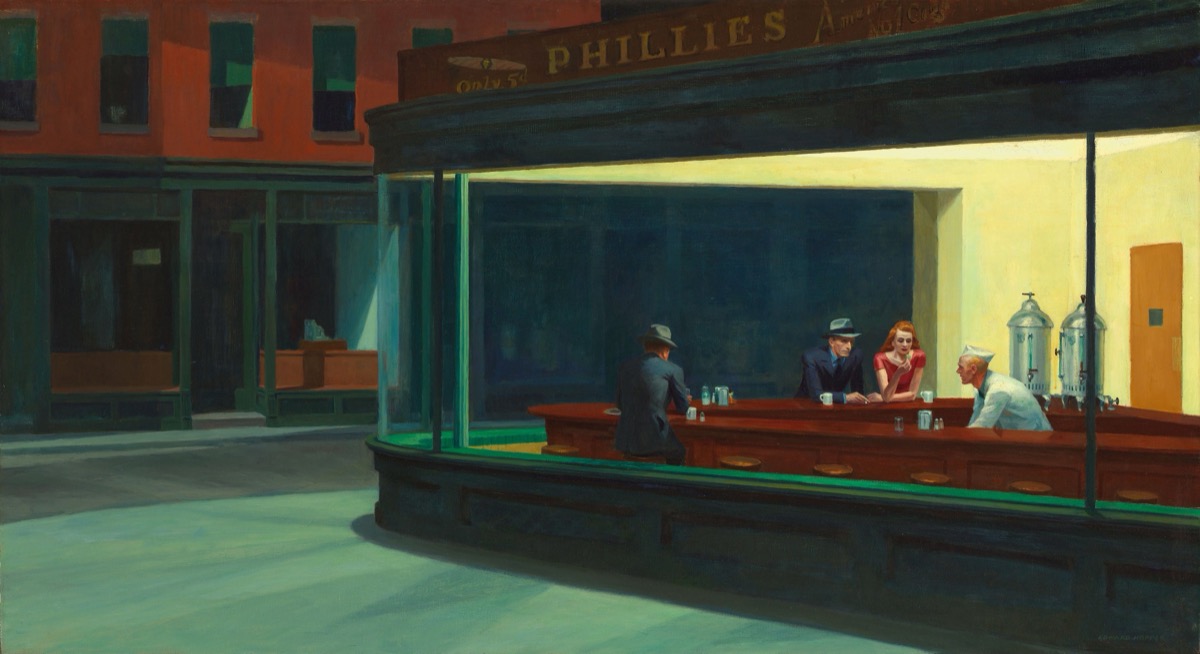
We all know the easiest way to make a change. Change your environment.
- You don't want to eat junk food? Don't have it in the house.
- You don't want to watch TV? Cancel your subscriptions.
- You don't want to be addicted to your phone? Lock it up, brick it, uninstall.
- You want to exercise? Move somewhere where you can walk to work.
If you've ever done any of these environmental changes you realize how effective they are to getting you to change behavior. 0 willpower required after that first big change-up.
And now we look around the world and wonder why there's no community. There's no community because people are weak. We can't make a change unless our environment precludes the choice or forces the choice. And modernity has thrown us into a situation where we no longer have any communities that exist by obligation. That exists as environmental features. School is that last and final one of those. That's why adults have never had a friend since school.
The nostalgia people feel for school isn't really about school. It's about the last time their environment did the work of community for them.
How'd we get here?
Liberalism, in its long project of expanding individual freedom, has systematically dissolved obligatory structures. Not maliciously — this is mostly the exhaust of genuine goods: mobility, pluralism, exit rights, the erosion of arrangements people were often glad to escape. But the cumulative effect is an environment stripped of the conditions that made community form automatically. What's left are chosen communities — which is to say, communities that require ongoing willpower to maintain. And willpower, as we've established, is a bad foundation. Chosen communities are fragile by design. They persist only so long as everyone keeps choosing them, which means they're always one competing priority away from dissolution.
Really?
To see this play out in real time:
- The Long Harvest - Follows one individual in each generation
- The Residue - A mirror to the harvest, following the communities that were left behind
The problem is the shared premise underneath: that freedom from obligation is what human beings most need. As long as that premise holds, the environment will keep being optimized against the conditions that make community automatic.
Communism? Socialism? lol, no
The obvious reflex is to reach for an alternative — socialism, communism, some collective arrangement that redistributes what liberalism has privatized. But the dominant versions of those projects share liberalism's anthropology. They disagree about who controls the means of production; they don't disagree that the individual is the basic unit, freedom-from-obligation the basic good, and tradition a set of constraints to be overcome. In practice, the Soviet project was as aggressively corrosive of obligatory community as any market society — it dismantled villages, suppressed churches, severed extended family bonds, all in the name of a different kind of progress. The mechanism changed. The environment-stripping logic didn't.
The problem isn't which system manages the economy. The problem is the shared premise underneath: that freedom from obligation is what human beings most need. As long as that premise holds, the environment will keep being optimized against the conditions that make community automatic. The system that rebuilds those conditions will have to be built on a different anthropology entirely — one that takes obligation not as a constraint on the good life, but as one of its load-bearing structures.
- The Shadow of Liberalism - Communism & socialism share the same fate and root as liberalism
Further consequences:
- Knowledge Cannot Centralize - A theory of communal and distributed knowledge. Something that is being dissolved along with communities.
conversation
Comments
Sign in to join the conversation.
No comments yet. Start the thread.